
Ichiro Suzuki's net worth is most commonly estimated at around $180 million as of 2026. That figure comes from aggregator sites like Celebrity Net Worth, and while no one outside Ichiro's financial team can confirm the exact number, it's a defensible ballpark when you work through the math yourself. This article walks through exactly how that estimate is built, which parts are verifiable, and which parts involve reasonable assumptions.
Ichiro Suzuki Net Worth: Facts, Estimate Range, and How to Verify

Takeshi Yamamoto
27 Mar 2026
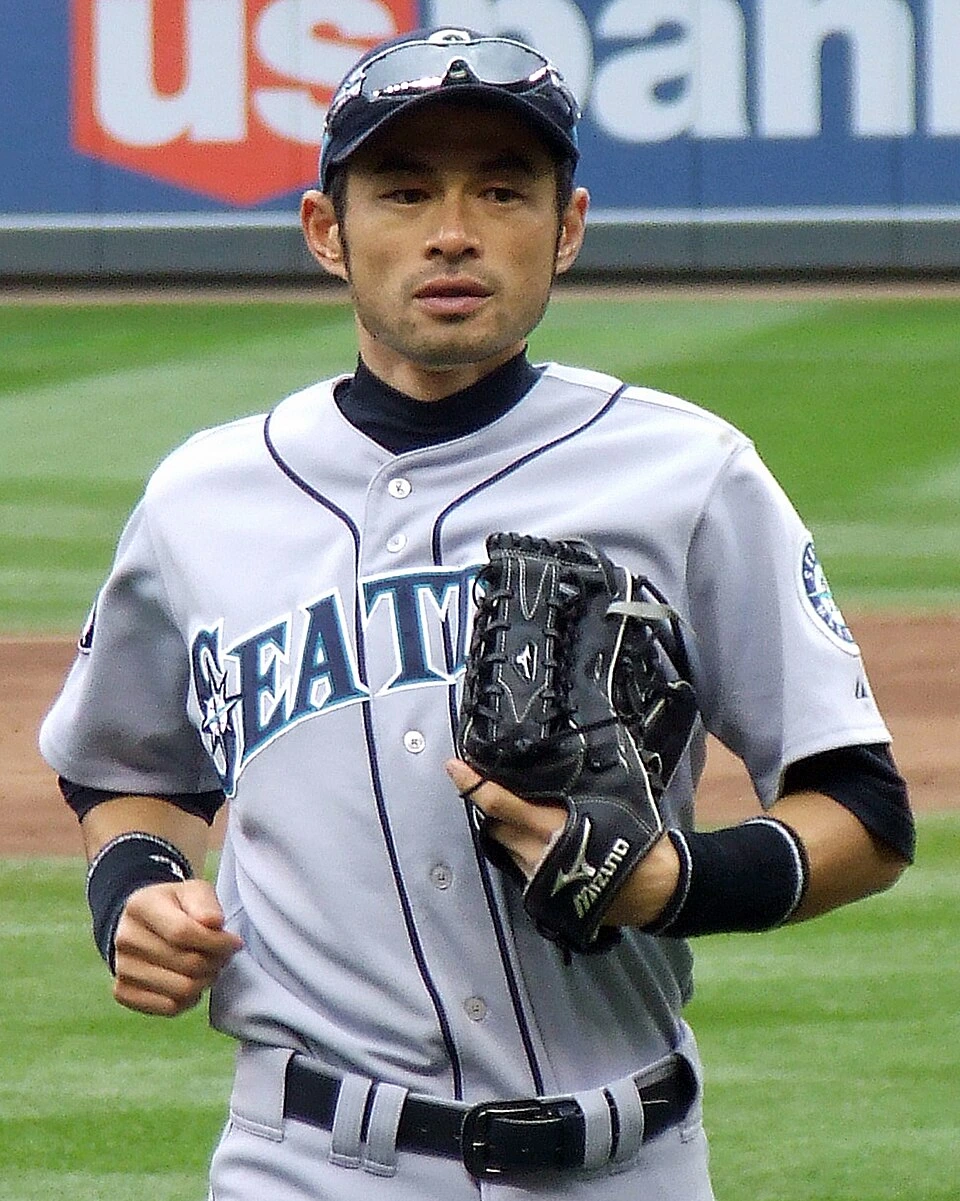
What people actually mean when they search for Ichiro's net worth

Net worth, in the balance-sheet sense, is total assets minus total liabilities. For a private individual like Ichiro, that means adding up everything he owns (investment accounts, real estate, cash, business interests, deferred salary payments still coming in) and subtracting anything he owes (mortgages, any outstanding debt). The result is a snapshot, not a permanent number. It changes as markets move, properties are bought or sold, and income continues to arrive.
The important thing to understand is that celebrity net worth estimates are exactly that: estimates. No public financial disclosure is required for private individuals in the U.S. or Japan. So when you see a figure like $180 million attached to Ichiro's name, it's the product of adding up known salary data, extrapolating from endorsement reports, and making educated guesses about taxes paid, spending habits, and investment returns. The number is useful as a reference point, not a certified audit.
How Ichiro actually built his wealth
Japan years: the foundation at Orix

Before Ichiro ever stepped into an MLB clubhouse, he was already one of the highest-paid players in Japanese professional baseball. He spent nine seasons with the Orix BlueWave (1992 to 2000), winning seven consecutive Golden Glove awards and seven batting titles. By 1996, his annual salary at Orix had already climbed to 200 million yen, which was significant enough that news outlets reported it as a milestone (he became the youngest player to reach that threshold in NPB). At early-to-mid-1990s exchange rates, that translated to roughly $1.8 to $2 million per year. His total NPB earnings across nine seasons were substantial but nowhere near what his MLB career would produce.
The MLB move: Seattle and beyond
The Seattle Mariners won the posting bid for Ichiro in late 2000, paying Orix $13.125 million for the rights to negotiate with him. That posting fee came out of Seattle's budget, not Ichiro's pocket, but it signals how much his market value had already grown. He signed a three-year deal with Seattle and went on to have one of the most decorated MLB debuts in history, winning Rookie of the Year, the AL MVP, and a Gold Glove all in his first season (2001).
His most significant contract came as an extension with the Mariners. Reports from ESPN and Wikipedia (citing Associated Press reporting) describe the deal as worth $90 million total over five years, with $17 million in annual salary and a $5 million signing bonus. Crucially, $25 million of that $90 million was deferred at 5.5% annual interest, with payments structured to run through at least 2032. That deferred income stream is still active today, meaning Ichiro continues to receive income from his playing days well into his post-retirement life.
After his Mariners tenure, Ichiro played for the New York Yankees and Miami Marlins before returning to Seattle for his final MLB seasons and officially retiring in 2019. His total MLB salary across nearly two decades is estimated in the range of $170 to $180 million in combined contract value before taxes, making him one of the highest-earning Japanese athletes in American professional sports history.
Endorsements: a deliberately selective approach

Ichiro was famously selective about endorsement deals, particularly in the U.S. market. Sports Business Journal reported in 2001 that he had been offered endorsement deals worth well in excess of $14 million and turned most of them down. ESPN reported at the time that his agent confirmed offers of at least $10 million, including a $5.5 million deal from a fast-food company that he declined. He eventually agreed to a deal with Upper Deck, the memorabilia and trading card company.
His long-term endorsement relationships have been primarily in Japan. Mizuno signed him as a spokesperson in 1995, a relationship that lasted through much of his career. He also had contracts with Asics and Upper Deck for memorabilia marketing. The Japanese endorsement market for a figure of Ichiro's stature operates differently from Western celebrity deals: brands there often value long-term loyalty over short-term campaign volume, and deals tend to be more quietly structured. Total career endorsement income is not publicly confirmed, but it almost certainly runs into the tens of millions of dollars when you add up two-plus decades of Japanese and U.S. brand relationships.
What's verified vs. what's estimated
Here's a practical breakdown of what we can say with confidence versus what involves reasonable estimation:
| Category | Verified or Highly Reliable | Estimated or Inferred |
|---|---|---|
| MLB contract value | $90M extension (ESPN/AP reporting), posting fee of $13.125M to Orix | Exact taxes paid, agent fees, and net take-home |
| Deferred salary | $25M deferred at 5.5% interest, payments through at least 2032 (ESPN) | Exact payment schedule and total with interest |
| NPB salary | 200M yen/year by 1996 (Web Japan) | Total NPB career earnings across all nine seasons |
| Endorsements | Mizuno (1995+), Asics, Upper Deck; $14M+ in offers reported | Total career endorsement income; current deal values |
| Real estate | Sold a Downtown Los Angeles condo (LA Times) | Current portfolio, purchase prices, and total equity |
| Net worth estimate | ~$180M cited by Celebrity Net Worth | No verified reconciliation or asset-by-liability breakdown published |
The $180 million figure is plausible when you consider cumulative MLB salary (pre-tax gross likely above $150 million across all contracts), ongoing deferred payments with interest, Japanese endorsements over 25-plus years, and reasonable investment growth. But it is not a certified number. Treat it as a well-reasoned ceiling-to-midpoint estimate, not a confirmed balance sheet.
Breaking down where the money likely sits

For someone who earned at Ichiro's level over three decades, the wealth doesn't just sit in a bank account. Here's how it most likely breaks down across asset categories:
- Investment accounts and securities: The largest single bucket for most high-earning athletes who retire in their 40s. If even a fraction of his MLB earnings were invested at modest market returns over 20 years, the compounding effect alone would be substantial. Assuming a conservative post-tax MLB income in the $80 to $100 million range and consistent long-term investing, this category alone could account for the majority of his current net worth.
- Deferred salary (ongoing income): The ESPN-reported $25 million deferred at 5.5% interest running through 2032 means Ichiro has been receiving structured payments for years post-retirement. This is essentially a guaranteed annuity-style income stream, which continues to add to his liquid asset base.
- Real estate: The LA Times confirmed at least one property transaction (a Downtown LA condo he sold quickly). Wealthy athletes and entertainers of his stature routinely hold multiple properties, but the specifics of his current real estate portfolio are not publicly known.
- Memorabilia and autograph-related income: Upper Deck and similar partnerships generate ongoing royalties from signed merchandise, card releases, and memorabilia programs. For a player of Ichiro's historical significance (3,089 MLB hits, 1,278 NPB hits, Hall of Fame caliber career), demand for authenticated memorabilia remains strong.
- Front office and advisory roles: Ichiro transitioned into a role with the Mariners organization after retiring. While these roles are rarely high-salaried in the traditional sense, they carry value in terms of ongoing engagement with the sport and future opportunities.
How Ichiro's wealth compares to other MLB stars and Japanese athletes
To put $180 million in context, Ichiro sits comfortably in the upper tier of MLB player wealth from his generation, though not at the very top. Players like Alex Rodriguez and Derek Jeter, who signed contracts worth $250 million or more, have estimated net worths in the $300 to $350 million range. Ichiro's more modest contract sizes (relative to the biggest deals of the era) are partially offset by his unusually long career, selective-but-consistent endorsement income, and the fact that his financial profile spans two major professional leagues across two countries.
Among Japanese athletes who've crossed over to American sports, Ichiro remains the benchmark. Seiya Suzuki, who made a similar NPB-to-MLB transition more recently, is still early in his earning arc and operates on a much smaller financial scale at this stage of his career. Ichiro's pioneering role in that pathway also gave him a cultural premium in Japan that sustained endorsement value for decades.
Compared to prominent Japanese business figures, Ichiro's wealth is significant but not extraordinary. Industrial and technology leaders in Japan operate at entirely different scales. But within the sports and entertainment space, he's among the wealthiest Japanese athletes ever, full stop.
Timeline: how earnings built up and what that means today
- 1992 to 2000 (Orix, NPB): Earned progressively higher NPB salaries, reaching 200 million yen per year by 1996. Total NPB career earnings estimated in the range of $10 to $15 million equivalent, modest by MLB standards.
- 2001 (MLB debut, Seattle): Signed initial MLB deal, began building U.S. endorsement relationships. Won Rookie of the Year and MVP in the same season, dramatically increasing his market value.
- 2001 to 2004 (peak endorsement attention): Reports from Sports Business Journal and ESPN suggest he was offered $14 million-plus in U.S. endorsement deals in 2001 alone. He accepted selectively, prioritizing fewer, longer-term partnerships.
- 2007 to 2012 (major contract extension): The $90 million extension with deferred payments locked in significant long-term guaranteed income, including the $25 million deferred component at 5.5% interest through 2032.
- 2013 to 2018 (Yankees, Marlins, return to Seattle): Continued earning MLB salaries while maintaining Japanese endorsement relationships throughout this period.
- 2019 (retirement): Officially retired after an emotional game in Japan. Transitioned into a Mariners front office role, maintaining connection to the sport.
- 2019 to 2026 (post-retirement): Deferred salary payments continue. Investment growth on accumulated assets continues. Memorabilia market for Ichiro collectibles remains active. Net worth estimated to have remained stable or grown modestly during this period.
The deferred payment structure is worth emphasizing again because it's unusual. Most people assume an athlete's income stops when they retire. For Ichiro, the Mariners have been making structured payments well past his last game, and they'll continue doing so until at least 2032. That means his net worth today is partially supported by contractually guaranteed future income, which makes it more stable than it might appear for someone who's been out of the game since 2019.
How to research this yourself (and avoid bad sources)
If you want to verify or update Ichiro's net worth estimate on your own, here's how to approach it practically:
- Start with Spotrac for MLB salary data. It's the most widely used public database for historical player contracts and annual salary figures. Use it to build a baseline of gross career MLB earnings.
- Check primary reporting from ESPN, the Seattle Times, and AP-sourced Wikipedia entries for specific contract terms, especially anything involving deferred payments, signing bonuses, or unusual structures. The $90 million extension details are documented across multiple credible outlets.
- Use Celebrity Net Worth as a reference point, not a source. Their $180 million estimate is useful as a market consensus, but they don't publish asset-by-liability reconciliations. Treat it like a poll, not a financial statement.
- For endorsement data, trade publications like Sports Business Journal (for U.S. deals) and Japanese sports media are more reliable than general celebrity gossip sites. Note that Japanese endorsement deal values are rarely disclosed publicly.
- For real estate, the LA Times real estate section and county property records (if you know the location) can surface verified transaction data. The LA condo sale is one confirmed datapoint; others may exist but haven't been widely reported.
- Be skeptical of any site that claims to have a precise figure (like '$183,400,000') without sourcing. Precision in celebrity net worth estimates is usually false confidence. A range ($160M to $200M) is more honest than a single decimal-level number.
Common red flags in celebrity net worth reporting include: numbers that never change year over year (suggesting the site hasn't updated its model), figures that don't account for taxes (gross career earnings and net worth are very different things), and sites that don't distinguish between contracted value and money actually received. Always ask: is this gross contract value, or an estimate of actual accumulated wealth after taxes, spending, and investment?
It's also worth noting that Japanese cultural norms around privacy and wealth disclosure mean Ichiro has never been the type to publicly discuss finances. Unlike some American athletes who build public business portfolios or make high-profile investments in startups, Ichiro's post-playing financial life is quiet by design. That makes verification harder but doesn't make the underlying wealth any less real.
If you're interested in how other prominent figures with the Suzuki name have built their own wealth through entirely different paths, the profile of Osamu Suzuki, the longtime head of Suzuki Motor Corporation, offers a useful contrast between athlete and industrial-era wealth in Japan. This owner net worth figure can also help you compare how public estimates work for other Suzuki-affiliated names, including Maruti Suzuki owners Maruti Suzuki owner net worth.
The most defensible estimate for March 2026
Working from what's actually documented: cumulative MLB gross earnings likely above $150 million across all contracts, NPB earnings estimated at $10 to $15 million equivalent, career endorsement income (Japanese and U.S. combined) likely in the range of $20 to $40 million, ongoing deferred salary through 2032, and reasonable long-term investment returns on assets held over two decades, a net worth in the $150 to $200 million range is well-supported. The $180 million figure that circulates widely lands near the middle of that range and is not unreasonable.
The most honest answer is this: Ichiro Suzuki is almost certainly worth somewhere between $150 million and $200 million as of early 2026, with $180 million being the most commonly cited and broadly defensible estimate. He built that wealth through a combination of sustained elite performance across two countries, disciplined endorsement selectivity, and a structurally smart contract that keeps income flowing years after his last professional at-bat. For anyone researching where that number comes from, the work of building the estimate yourself is actually the most useful exercise, because it forces you to understand which parts are solid and which parts are educated guesses. If you are comparing other public estimates, you may also want to look at toshihiro suzuki net worth as a related reference point.
FAQ
Why do different websites give noticeably different “ichiro suzuki net worth” numbers?
Most discrepancies come from whether the figure is modeled as gross career earnings, estimated after-tax wealth, or net assets after assuming spending and investment performance. Even with the same salary and endorsement headlines, the spending rate assumption (how much of gross income gets retained) and the investment return rate can swing the midpoint by tens of millions.
Is the $180 million estimate mainly driven by contract earnings, or endorsements?
It is a mix, but contracts usually dominate the baseline because of the large multi-year MLB deal values and the deferred payments. Endorsements matter as a meaningful second pillar because they can be long-running in Japan and the U.S., but a rough model that over-weights endorsements can produce an inflated net worth compared to models that weight the deferred salary stream more heavily.
Does the deferred Mariners payment through 2032 change net worth estimates today?
Yes. Well-modeled net worth estimates treat part of deferred compensation as income already contractually secured, effectively supporting liquid assets or future cash flow. A common mistake is to assume the money is not “real” until it is paid out, which makes the estimate too low if the model is snapshot-based rather than cash-flow-based.
How can I tell whether a site is using gross contract value instead of true net worth?
Check for whether they cite “career earnings” figures and then label the result as net worth, or whether they clearly distinguish between contract value (what was promised) and wealth (assets minus liabilities). If the number does not appear to adjust for taxes, it is often closer to gross earnings dressed up as net worth.
What taxes should I assume when converting MLB earnings into net worth estimates?
You generally cannot use a single rate because Ichiro’s income spans different jurisdictions and years, plus withholding varies. A practical approach for DIY estimates is to model a blended effective rate (for example, somewhere between mid-20s and mid-30s percent for many professional-athlete income scenarios) and then stress-test with a higher and lower rate to see how much the net worth range expands.
Do real estate and business interests materially affect the $150 to $200 million range?
They can. Even a few properties and equity-like holdings can move net worth by several million each, but they are hard to verify publicly. That is why many estimates rely on conservative placeholders for assets and then focus on income streams that are more documentable, like MLB contract structures and deferred payments.
Could liabilities, like mortgages or personal debt, significantly reduce the net worth figure?
They can, but there is no strong public basis for assuming large liabilities relative to his income level. Most estimate models assume liabilities are modest compared with assets unless there is evidence of leveraged investments or major debts, so a large liability could be an edge case that pushes a “headline” net worth down.
Why might “net worth today” change even if his public income sources stop?
Because investments and tax treatment continue to matter, and deferred income can keep arriving after retirement. Also, spending patterns often differ post-career, and market movements can change asset values even when there is no new earnings headline.
Is ichiro suzuki net worth computed differently than it would be for a U.S.-listed company executive?
Yes. For a private individual, there is no standardized public balance sheet, so estimates rely on reconstruction (salary, endorsements, and assumptions). With executives, you may see more filings, disclosed holdings, or easier-to-validate compensation structures, which reduces uncertainty compared with a private athlete’s financial footprint.
What is the fastest DIY method to sanity-check the estimate without building a full spreadsheet?
Start with the article’s grounded midpoint approach: assume cumulative pre-tax MLB gross earnings are well above $150 million, then apply an after-tax retention model, subtract a reasonable spending estimate, and add the effect of deferred payments continuing through the 2030s. Finally, stress-test 3 scenarios (low, medium, high investment return) to see whether the result still falls inside roughly $150 to $200 million.
What common mistakes lead people to believe the net worth number is too high or too low?
Overconfidence in a single published figure (no sensitivity analysis), treating contract value as cash received, ignoring taxes and spending, and assuming endorsements are either zero or fully known. The most reliable estimates explicitly separate what is documented (contract structures, some pay disclosures, timing of deferred payments) from what is assumed (returns, retention rate, and endorsement totals).