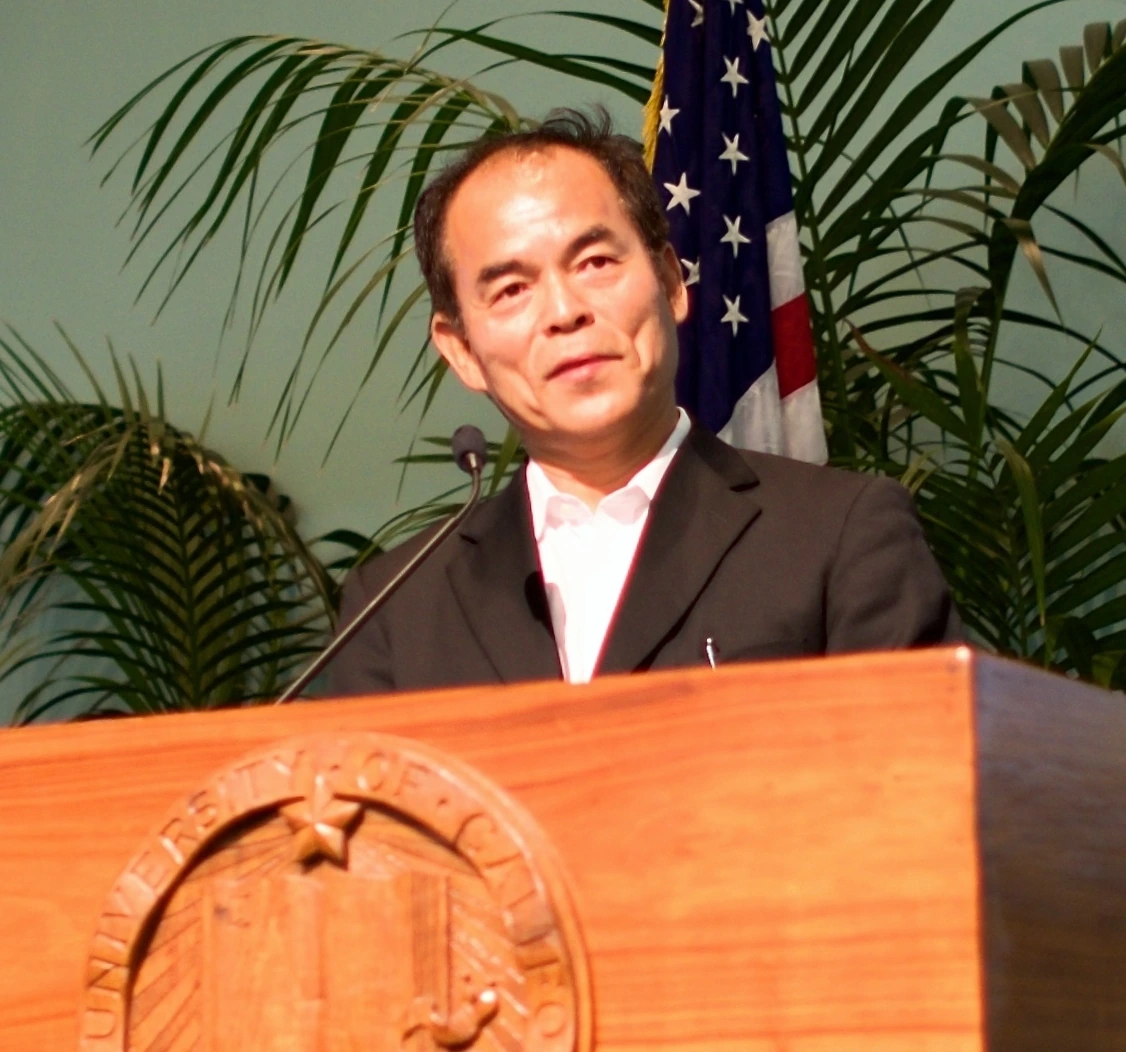
This matters more than it sounds. Confusing him with unrelated individuals named Shuji Nakamura is one of the most common misinformation patterns in this space. Several net-worth listing pages exist for people of the same name with zero evidentiary linkage to blue-LED patents or Nobel records. Always cross-reference the biographical details before accepting any number.
What "net worth" actually means here (and why it's always an estimate)

Net worth, in any individual wealth context, is the total value of assets minus total liabilities. That means cash, investments, real estate, private equity stakes, and any other holdings, minus debts, mortgages, and taxes payable. Simple in theory, complicated in practice, especially for someone like Nakamura whose most valuable assets are likely stakes in private companies and intellectual property related income streams, neither of which carry a daily public price tag.
The key distinction reputable wealth profilers draw is between documented items and estimated items. Documented items are things like court-recorded payments, disclosed share ownership in regulatory filings, or signed transactions with publicly announced terms. Estimated items are things like the assumed value of a private company stake, guessed real-estate holdings, or inferred consulting income. For Nakamura, both categories apply, and the honest approach is to keep them clearly separated rather than collapsing everything into a single confident-sounding number.
The career path that built his wealth
Nakamura's financial story is genuinely unusual, even by the standards of Nobel laureates. Most of his most significant wealth events don't come from a traditional salary ladder. They come from patents, legal battles, entrepreneurship, and the long commercial tail of a technology he developed while working at a relatively small Japanese company.
The Nichia years and the blue LED patent dispute
Nakamura did his foundational blue LED research while employed at Nichia Corporation in Japan during the late 1980s and early 1990s. The blue LED turned out to be one of the most commercially transformative inventions of the modern era, enabling energy-efficient white light sources and, eventually, the screens on almost every device you own. The economic value was enormous: the Tokyo District Court, when adjudicating Nakamura's compensation claim against Nichia, estimated the invention-related profit at roughly ¥60.4 billion and ordered ¥20 billion as reasonable compensation. That headline figure got a lot of press attention.
The actual settlement, however, was significantly lower. After the Tokyo High Court recommended a settlement, Nichia paid Nakamura JPY 608,570,000 as reasonable remuneration, plus JPY 235,340,000 as interest damages, for a documented total of approximately JPY 843.9 million (roughly USD 8 million at prevailing rates at the time of settlement in 2005). This is a concrete, court-linked cash figure, and it's the single most verifiable wealth event in Nakamura's financial history. It's also a useful lesson: the gap between the initial ¥20 billion award narrative and the actual settlement amount shows how dramatically initial "upside" claims can diverge from realized wealth.
The Nobel Prize cash component
Nakamura received a share of the 2014 Nobel Prize in Physics. The Nobel cash award is a real, documented figure, though it is denominated in Swedish kronor and split among multiple laureates when the prize is shared. In the case of the 2014 Physics prize (shared among three recipients), Nakamura's individual cash portion was a fraction of the full prize amount. This is meaningful as a documented income event, but it should not be confused with his overall net worth; it's a single payment, not a measure of accumulated assets.
UCSB professorship and institutional income
Nakamura has held a faculty position at UCSB, which comes with salary, benefits, and research funding access. Professorial compensation at a major US research university for someone of his stature can be substantial, and post-Nobel recognition also tends to increase demand for paid consulting, speaking, and advisory roles. These are harder to quantify from public records, but they represent an ongoing income layer that compounds over time.
Soraa Inc. and the entrepreneurship chapter
One of the more material wealth drivers outside the Nichia saga is Nakamura's co-founding of Soraa Inc., a solid-state lighting technology company. Founder equity in a tech startup can be worth very little or a great deal depending on company performance and exit events, and Soraa's valuation trajectory is not fully transparent in public records. This is a category-two (estimated) wealth item: potentially significant, but not documentable with precision from available sources.
Blue Laser Fusion: the most active current wealth driver
The most recent and arguably most consequential wealth variable is Blue Laser Fusion Inc., which Nakamura co-founded in November 2022 and where he serves as CEO. In July 2023, the company raised USD 25 million in seed-stage funding led by SPARX and JAFCO. Then in March 2024, Itochu Corporation announced it would accept shares of Blue Laser Fusion through a third-party allotment and signed a strategic alliance agreement with the company, naming Nakamura as CEO in the official press release. These are concrete, documented corporate events. They signal that Blue Laser Fusion is attracting serious institutional capital and strategic partners, which increases the theoretical value of Nakamura's founder stake. That said, this is a private company at an early stage, which means the actual mark-to-market value of his equity remains speculative until a later funding round or liquidity event reveals clearer pricing.
How reliable net worth estimates are actually compiled
For someone like Nakamura, a defensible wealth estimate layers together multiple types of evidence rather than relying on any single source. The methodology works roughly like this: start with documented cash events (the Nichia settlement, the Nobel prize share), add in plausible income from institutional roles (UCSB salary, post-Nobel speaking and consulting), then layer in estimated equity value from entrepreneurial ventures (Soraa, Blue Laser Fusion) using any available funding-round data as a valuation anchor, and finally subtract any known or estimated liabilities.
The problem with most net-worth aggregator sites is that they skip this layered approach entirely. Some pages claim a very small range for Nakamura, in the $100,000 to $1 million band, without providing any auditable asset or liability evidence. Others give a single confident-sounding number with no sourcing at all. Neither approach is defensible. A genuinely rigorous estimate for Nakamura will always acknowledge the documented cash events, flag the private equity uncertainty, and present a range rather than a pinpoint figure.
It's also worth applying this same critical lens when reading wealth profiles of other prominent figures in the same space. For example, profiles like Masaya Nakamura's net worth face similar sourcing challenges when private business interests are the primary wealth driver, and the methodology for separating documented from estimated wealth is equally important there.
The most defensible net worth range (as of April 2026)
Given the available evidence, a reasonable working estimate for Shuji Nakamura's net worth lands somewhere in the range of USD 10 million to USD 40 million, with the wide spread reflecting the genuine uncertainty around his private equity positions. Here's how that range breaks down:
| Wealth Component | Type | Estimated Contribution | Confidence Level |
|---|
| Nichia settlement (2005) | Documented cash | ~USD 8M (at settlement) | High (court-verified) |
| Nobel Prize share (2014) | Documented cash | ~USD 400K–600K (estimated share) | High (documented award) |
| UCSB salary + post-Nobel income (ongoing) | Estimated income | USD 1M–3M cumulative | Medium |
| Soraa Inc. founder equity | Estimated private equity | USD 1M–10M+ (highly uncertain) | Low (private company) |
| Blue Laser Fusion founder equity (CEO) | Estimated private equity | USD 1M–20M+ (early stage) | Low (seed stage, private) |
| Consulting, speaking, royalties | Estimated | USD 500K–2M cumulative | Low |
The lower bound of around USD 10 million is anchored by documented cash events plus conservative income assumptions and modest private equity valuations. The upper end of USD 40 million (or potentially higher) would require Blue Laser Fusion's valuation to have increased significantly since the 2023 seed round, and for Nakamura's equity stake to remain relatively undiluted. Neither assumption is certain at this stage, which is exactly why a range is more honest than a single figure.
What could push the number up
- A later funding round or strategic acquisition of Blue Laser Fusion at a higher valuation, which would increase the mark-to-model value of Nakamura's founder stake
- Itochu's strategic alliance deepening, potentially signaling institutional validation that attracts further capital
- Additional licensing deals or royalties connected to blue LED and related photonics patents
- High-value advisory or consulting arrangements following continued recognition in the laser fusion and clean energy space
What could push the number down
- Dilution from later funding rounds at Blue Laser Fusion, which would reduce Nakamura's effective ownership percentage
- Poor commercial performance or extended R&D burn at Blue Laser Fusion before revenue materializes
- Tax obligations in the US and Japan that reduce net realized value from any liquidity event
- The historical precedent from the Nichia case applies here too: headline valuation narratives often don't translate into proportional personal wealth
How to verify the number yourself (and what to ignore)
The most reliable way to update or verify any net-worth figure for Nakamura is to track the primary sources rather than aggregator pages. Here's a practical checklist:
- Start with NobelPrize.org's official biography to confirm identity (blue LED, UCSB, Nobel 2014) before accepting any net-worth source as referring to the right person
- Check Japanese corporate press releases directly for any new funding rounds, share allotments, or strategic agreements involving Blue Laser Fusion; Itochu's March 2024 announcement is a model example of what to look for
- Use the Nichia settlement press release as your documented cash baseline, and do not let aggregator sites inflate that figure back toward the initial ¥20 billion court-order narrative
- For any new ventures or equity events, look for official investor-relations announcements from named institutional investors like SPARX, JAFCO, or Itochu rather than second-hand reporting
- Treat any site that gives a confident single number below USD 5 million without sourcing the Nichia settlement or Nobel prize as either covering the wrong person or using no verifiable methodology
- Watch for follow-on funding rounds at Blue Laser Fusion, which would provide a new valuation anchor and potentially materially shift the upper bound of the estimate
It's also worth noting that Japanese business culture tends toward less public disclosure of personal wealth than, say, US tech founders who appear on Forbes rankings. This is a structural limitation for any wealth profile in this space. You'll notice the same challenge when looking at profiles like Yutaka Nakamura's net worth, where limited public filings mean the estimate relies heavily on inferred career earnings rather than disclosed assets.
One more thing worth flagging: net-worth sites that present Shuji Nakamura's wealth as being in a tiny band (say, under USD 1 million) are almost certainly either covering a different person with the same name or using a methodology that ignores the Nichia settlement entirely. A man who received a documented court settlement of nearly USD 8 million in 2005 alone, won a Nobel Prize nine years later, and has since co-founded a venture-backed fusion energy startup is not worth less than a million dollars by any reasonable measure. When you see that kind of estimate, it's a signal to move on to a more rigorous source.
Putting it all in context
Nakamura's wealth story is less about accumulation through traditional corporate success and more about the long economic consequence of a single transformative invention. The blue LED turned out to underpin an industry worth hundreds of billions of dollars globally, and yet his personal share of that value, through legal settlements and equity, has been surprisingly difficult to translate into documented personal wealth at the scale the invention's commercial impact might suggest. The gap between "inventor of the blue LED" and "net worth in the tens of millions" is a real and interesting story about how Japanese employment law, corporate culture, and the challenges of inventor compensation shaped one of the more unusual wealth profiles in the global tech innovation space.
For readers interested in how wealth profiles of prominent figures in connected industries compare, it's useful to look across a range of cases. For instance, Shingo Nakamura's net worth offers a contrast in terms of how entertainment-sector wealth is estimated versus the patent-and-equity driven model that applies to Shuji's case. Similarly, the methodology used when examining someone like Yuichi Nakamura's net worth (where career income and brand deals are the primary drivers) shows just how different the building blocks of a wealth estimate can be depending on the field.
The broader takeaway is that Nakamura's estimated net worth of USD 10 million to USD 40 million as of April 2026 is a defensible range built on real evidence, not blog speculation. The Nichia settlement provides a hard floor, the Blue Laser Fusion equity provides the upper-range potential, and everything in between is informed estimation. That's the most honest thing you can say about any private individual's wealth, and it's a significantly more useful answer than a single number pulled from an unsourced aggregator page. If Blue Laser Fusion reaches a major liquidity event in the coming years, that estimate will need a serious upward revision. Until then, track the corporate announcements and treat any single-number claim without sourcing as noise.
For context on how other figures in the tech and creative space are profiled, profiles like Hiroki Nakamura's net worth and Hikaru Nakamura's net worth according to Forbes show how dramatically different the evidence base can be depending on whether someone operates in a publicly trackable domain. Shuji Nakamura sits in the harder-to-document middle ground: globally significant, publicly recognized, but financially opaque in the ways that matter most for a precise net-worth figure.