
No verified net worth figure exists for Toyotarou. The only numbers circulating online come from automated aggregator sites like PeopleAI, which peg an estimate around US$1.45 million while explicitly labeling it a calculation rather than a disclosed figure. No publisher filing, tax record, business press profile, or statement from Shueisha, Viz Media, or Toyotarou himself backs that number up. What we can do is build a reasonable range from what is publicly documented: his serialization credit on one of the best-selling manga franchises in history, over two dozen collected tankōbon volumes distributed worldwide, and a decade-long run on Dragon Ball Super. Based on those publicly verifiable career facts, a working estimate of roughly US$1 million to US$3 million is plausible, though the real figure could be higher or lower depending on contract terms no one outside the deal has seen.
Toyotarou Net Worth 2026: Estimated Wealth & Income Sources.

Toyotarou at a glance
| Detail | Information |
|---|---|
| Full pen name | Toyotarou (also romanized as Toyotaro) |
| Real name | Not publicly disclosed |
| Date of birth | May 17, 1978 |
| Place of origin | Tochigi Prefecture, Japan |
| Occupation | Manga artist (illustrator, character designer) |
| Debut work | Dragon Ball Heroes: Victory Mission (V Jump, November 2012) |
| Primary ongoing work | Dragon Ball Super (V Jump, August 2015 issue onward) |
| Publisher | Shueisha (Japan); Viz Media (English); Glénat (French) |
| Active years | 2012 to present |
Career biography and timeline
Early career and doujin roots
Before Toyotarou became the official face of new Dragon Ball manga, he was known in the doujin community for creating high-quality fan comics based on the franchise. His work attracted attention precisely because his art style and grasp of the franchise's visual language were unusually close to Akira Toriyama's own. That reputation in fan circles is widely credited as the reason Shueisha and Toriyama's studio took notice of him. This path from fan creator to official artist is unusual in Japan's manga industry, where most artists come through publisher-run talent searches or assist programs, and it says a lot about the quality bar Toyotarou had already set for himself before going professional.
Professional debut: Dragon Ball Heroes: Victory Mission
Toyotarou's professional debut came in November 2012, when his manga Dragon Ball Heroes: Victory Mission launched in Shueisha's V Jump magazine. Sources: V Jump (publisher listing of Dragon Ball Heroes: Victory Mission, Nov 2012) and Anime News Network interviews as cited on Toyotarou, Wikipedia (publisher/interview citations to V Jump and ANN) V Jump lists Dragon Ball Heroes: Victory Mission as debuting in its November 2012 issue, and Anime News Network has archived interviews referencing this early Shueisha credit.. The series was tied to the Dragon Ball Heroes arcade card game and gave Toyotarou his first official credit under the Shueisha umbrella. It was a strategic fit: a franchise-adjacent project that let him demonstrate his ability to handle Dragon Ball characters with commercial and brand accountability behind the work, not just fan enthusiasm.
Dragon Ball Super: from the August 2015 issue onward
The milestone that defines Toyotarou's career came with the August 2015 issue of V Jump, released June 20, 2015. That issue launched Dragon Ball Super, the manga continuation of the Dragon Ball franchise, credited as story by Akira Toriyama and art by Toyotarou. While the Dragon Ball Super anime was running simultaneously, the manga became its own distinct adaptation, eventually diverging from and then outlasting the anime. As of 2025, Shueisha has released 24 collected tankōbon volumes of Dragon Ball Super, with the 24th arriving on April 4, 2025. Each volume represents steady royalty income on top of whatever serialization fees Toyotarou earns per chapter.
Key dates
- November 2012: Professional debut with Dragon Ball Heroes: Victory Mission in V Jump
- June 20, 2015: Dragon Ball Super chapter 1 published (August 2015 issue of V Jump)
- April 4, 2016: Dragon Ball Super Volume 1 tankōbon released
- 2018: Dragon Ball Super anime ends; manga continues as the primary ongoing Dragon Ball narrative
- April 4, 2025: Dragon Ball Super Volume 24 released, marked with an official interview on the Dragon Ball Official Site
Major works that generate income
Toyotarou's income is almost entirely tied to Dragon Ball, which is both a strength and a concentration risk. The Dragon Ball franchise is one of the top-grossing media properties globally, so being its primary active manga artist is a financially significant position even if the terms of his deal are private.
- Dragon Ball Super manga (V Jump, August 2015 to present): The core serialization generating monthly chapter fees and ongoing tankōbon royalties across 24+ volumes
- Dragon Ball Super tankōbon volumes (Shueisha, Japan; Viz Media, English; Glénat, French; and other international publishers): Physical and digital collected volumes sold globally
- Dragon Ball Heroes: Victory Mission (V Jump, 2012): His professional debut, also collected in volumes
- Spin-off and supplementary manga contributions: Short collaborative chapters and special issues tied to Dragon Ball events and film releases
- Official Dragon Ball franchise materials: Character design consultations, volume extras, bonus art for official publications
How Toyotarou likely earns money
Manga creators in Japan typically earn from two primary channels: serialization fees paid by the publisher per page or per chapter, and royalties on collected volume sales. For someone in Toyotarou's position, working on one of the most commercially prominent manga serializations in Japan, both streams are active and recurring. The international reach of Dragon Ball Super adds a third layer through licensing and royalty participation in international editions. Beyond the core manga work, his profile as the Dragon Ball Super artist creates secondary income opportunities through event appearances, collaborations, and merchandise that references his specific art style.
Probable income streams, broken down
Serialization fees
Japanese magazine serialization typically pays artists on a per-page basis. Rates vary significantly by publisher, magazine prestige, and the artist's leverage. Industry reporting suggests established artists at major publishers like Shueisha can earn anywhere from ¥10,000 to ¥50,000 or more per page. Dragon Ball Super runs monthly in V Jump, typically delivering chapters of roughly 40 to 50 pages per installment. Even at mid-range rates, that represents meaningful monthly income from serialization alone, separate from any volume sales.
Tankōbon royalties
Each collected volume sold generates a royalty for the credited creators. In Japan, standard manga royalties are typically around 10% of the cover price for the author. Dragon Ball Super volumes sell at approximately ¥500 to ¥600 each in Japan. With 24 volumes released and the series consistently appearing on Oricon's book charts, even conservative sales estimates across the full run produce substantial cumulative royalties. The split between Toriyama's estate (or Capsule Corp. Tokyo, which managed his rights) and Toyotarou is not publicly disclosed, which creates the biggest single uncertainty in any estimate.
International licensing and royalties
Viz Media distributes Dragon Ball Super in English-speaking markets and lists Toyotarou as the illustrator across all volumes. French publisher Glénat credits 'Toyotaro' on their editions. Dozens of other international publishers handle further territory releases. How much of the international licensing revenue flows back to Toyotarou specifically depends on contractual terms between him and Shueisha, which are not public. In Japanese publishing, it is common for international rights to be held primarily by the publisher, with a negotiated share going to the creator, but the specific percentages here are unknown.
Merchandise
Dragon Ball is a multi-billion yen merchandise franchise. Whether Toyotarou receives any direct royalty cut from merchandise is unknown. Typically in Japan, merchandise rights for franchise properties rest with the rights-holding company (in this case, Shueisha and Bandai Namco's licensing arms) rather than flowing directly to individual artist contributors. His art does appear on officially licensed merchandise, but there is no public confirmation that he receives a direct per-unit royalty from those sales.
Event appearances, collaborations, and commissions
Toyotarou participates in official Dragon Ball events, convention appearances, and promotional content tied to new volume releases. He has given interviews published on the official Dragon Ball site. Whether these appearances are compensated separately or fall under his overall agreement with Shueisha is not disclosed. At the level of a manga artist for a globally recognized franchise, appearance fees, commissioned artwork for official publications, and collaboration work with the broader Dragon Ball commercial apparatus can add meaningfully to income.
Detailed estimate: what the numbers suggest
There is no verified figure. The US$1.45 million estimate on PeopleAI is a product of algorithmic estimation, not financial disclosure, and should be treated accordingly. Working from what is documentable: a Dragon Ball Super chapter of roughly 45 pages per month at even a conservative ¥20,000 per page would generate approximately ¥900,000 per month in serialization fees alone, or around US$6,000 to US$7,000 per month at recent exchange rates. Over a decade-long serialization, that channel alone accumulates to several hundred thousand dollars. Add tankōbon royalties across 24 volumes with likely millions of copies sold globally, and the cumulative earnings picture grows substantially. After Japanese income tax, which can reach 45% for high earners under the sōgō shotoku tax system, and after professional expenses, the net accumulated wealth figure is difficult to pin down but a range of US$1 million to US$3 million in total net worth is defensible as a working estimate. It could be higher if volume sales are strong and his contract terms are favorable, or lower if most of the franchise value accrues to Shueisha and the Toriyama rights structure. The honest answer is that the data needed to calculate this with confidence is not public.
Verifiable public assets, endorsements, and business interests
Nothing about Toyotarou's personal assets, property holdings, investment accounts, or business interests is documented in publicly available sources. He does not appear in Japanese business registries as a company director or listed entity. He has no documented public endorsements or brand deals outside of his work for Shueisha's Dragon Ball properties. Unlike some manga creators who establish production studios or public companies, Toyotarou operates under his pen name with no identifiable corporate entity registered to him in the public domain. This level of privacy is entirely normal for manga artists working within the Japanese publishing system, where business relationships run through the publisher rather than the creator's own commercial entity.
How Toyotarou compares to peer creators
Placing Toyotarou in context among Japanese creative figures helps frame what his wealth profile probably looks like. He is not in the category of creator-owners like Eiichiro Oda (One Piece) or Masashi Kishimoto (Naruto), who created their properties from scratch and hold original IP ownership. His position is closer to a highly skilled contracted artist working on an established IP, which structurally limits the upside compared to original creators but still places him in a favorable income tier due to the franchise's scale.
| Creator | Primary work | IP ownership | Estimated net worth range | Key wealth driver | Public transparency |
|---|---|---|---|---|---|
| Toyotarou | Dragon Ball Super (illustrator) | No (contracted artist) | ~US$1M–$3M (estimated) | Serialization fees + royalties | Very low: no public disclosures |
| Akira Toriyama (estate) | Dragon Ball (original creator) | Yes (original IP) | Estimated hundreds of millions USD | IP licensing + royalties globally | Low: private, franchise revenue tracked externally |
| Eiichiro Oda | One Piece (creator-owner) | Yes | Reported ~US$200M+ | IP ownership + global franchise | Low: rarely disclosed directly |
| Average mid-tier V Jump artist | Franchise tie-in manga | No | ~US$300K–$800K (estimated) | Serialization fees | None |
| Toru Ohtani | Elden Ring soundtrack composer | No (contracted) | Estimated, not verified | Composer royalties + licensing | Very low |
The comparison makes one thing clear: Toyotarou earns well for a contracted manga artist, but the structure of IP ownership in Japanese media means the largest financial rewards from Dragon Ball accrue to the rights-holding parties rather than the artist. His peers in the contracted-artist tier, like composers working on major game soundtracks, face similar dynamics. Creators like Ikutaro Kakehashi, the founder of Roland Corporation who built lasting business equity around his work in music technology, represent a structurally different wealth-building model where the creator owns the enterprise.
Methodology and limitations
This estimate draws on publicly available career data (Wikipedia, official Dragon Ball site, Viz Media, Oricon chart history), publicly reported industry norms for Japanese manga serialization fees and royalty rates, and known volume release timelines. The estimate does not use the PeopleAI or AllFamous figures as inputs because those sites do not disclose their methodology and are not backed by primary financial data. Assumptions include a conservative per-page rate of ¥20,000 (below the upper end reported for major publishers), a standard 10% cover-price royalty on tankōbon volumes, and a Japanese progressive income tax rate in the 33–45% range for high earners. What this estimate cannot account for: the actual contractual split between Toyotarou and Shueisha (or between Toyotarou and the Toriyama rights structure for shared credit), any advance payments or signing bonuses, whether Toyotarou participates in international licensing revenue, and how many copies each volume has actually sold (Oricon data exists but comprehensive historical aggregates require per-volume lookups not fully available for this report). These gaps are significant enough that any specific figure should be treated as directional rather than precise.
What we simply do not know
- The actual terms of Toyotarou's contract with Shueisha, including his per-page rate, royalty percentage, and any advance or bonus structures
- How the creative credit split between Akira Toriyama (story) and Toyotarou (art) translates into a financial split on royalties
- Whether Toyotarou receives any portion of international licensing revenue from Viz, Glénat, or other territory publishers
- Total cumulative sales figures per volume across all markets and formats
- Any personal investments, real estate holdings, or business interests Toyotarou may hold privately
- Income from merchandise bearing his artwork, if any flows directly to him
- His expenses, including any studio assistants, equipment, and professional costs, which would reduce net earnings
Related wealth profiles worth reading
Toyotarou's financial profile sits in an interesting space among Japanese cultural figures. For a very different model of wealth in Japanese entertainment, the career of Shintaro Katsu, the actor and producer behind the Zatoichi franchise, shows what creator-ownership of an IP looked like in an earlier era of Japanese media. For context on creator-owned wealth, see Shintaro Katsu net worth as an example of how owning an IP can produce substantially different financial outcomes. The wealth profile of Akebono Taro, the first foreign-born yokozuna in sumo, illustrates how sports fame translates (or struggles to translate) into lasting financial security in Japan's sports culture. Ikutaro Kakehashi, who founded Roland and effectively built the infrastructure of modern electronic music, represents a business-equity model of wealth entirely different from royalty-based income. And for a contemporary parallel in global sports and licensing, the profile of Toru Ohtani offers context on how contracted Japanese talents navigate international commercial ecosystems.
How reliable are net worth estimates for manga artists?
Aggregator sites that publish net worth figures for figures like Toyotarou use algorithmic models based on publicly visible career signals, inferred industry averages, and assumptions about royalty structures. They are not wrong to produce estimates, but they present those estimates with a precision the underlying data does not support. The Japanese publishing industry is famously opaque about individual creator income: Shueisha, Shogakukan, and other major publishers do not release per-creator earnings, and manga artists are not required to publicly disclose income in Japan beyond what appears in standard tax filings, which are not public documents. The figures on PeopleAI (US$1.45 million) and similar sites should be read as rough benchmarks, not verified facts. The estimate range in this article (US$1 million to US$3 million) is built on explicit assumptions that you can interrogate, which makes it more useful than a single number presented without context.
How do manga royalties and taxes work in Japan?
In Japan, manga creators earn in two main ways: serialization fees (genka, paid per page by the publisher during the run) and royalties on collected volume sales (typically around 10% of the cover price per copy sold). For major titles at Shueisha, both income streams are meaningful. Japanese income tax is progressive, with rates reaching 45% for income above ¥40 million annually, plus a 10% resident tax, meaning high-earning creators can face effective marginal tax rates near 55%. Many established manga artists work through professional management structures or personal companies to manage this burden, though whether Toyotarou does so is not publicly documented. International royalty income from overseas publishers typically flows first to Shueisha as the rights-holder, with a share then passed to the creator under contractual terms that are private.
Can readers expect this estimate to be updated?
The most reliable trigger for an updated estimate would be: official Oricon sales data becoming publicly available for Dragon Ball Super volumes, a publisher financial disclosure that references creator payments (rare but not impossible if Shueisha or a rights entity went public with relevant data), or an interview in which Toyotarou or his representatives discussed earnings directly. The Dragon Ball Official Site publishes periodic interviews with Toyotarou around major volume releases, so those are worth watching for any financial or business commentary, even though they have historically focused on creative topics.
Suggested images for this article
- Official cover of Dragon Ball Super Volume 1 (Shueisha, released April 4, 2016) — caption: 'Dragon Ball Super Volume 1, the first collected tankōbon from Toyotarou's run as the series illustrator.'
- Official cover of Dragon Ball Super Volume 24 (Shueisha, released April 4, 2025) — caption: 'Volume 24 marks a decade of Toyotarou's involvement with Dragon Ball Super.'
- Screenshot or cover image from V Jump August 2015 issue (first Dragon Ball Super chapter) — caption: 'The August 2015 issue of V Jump, released June 20, 2015, introduced Dragon Ball Super with Toyotarou as illustrator.'
- Viz Media's English Dragon Ball Super Volume 1 cover — caption: 'Viz Media's English-language edition credits Toyotarou across all international volumes.'
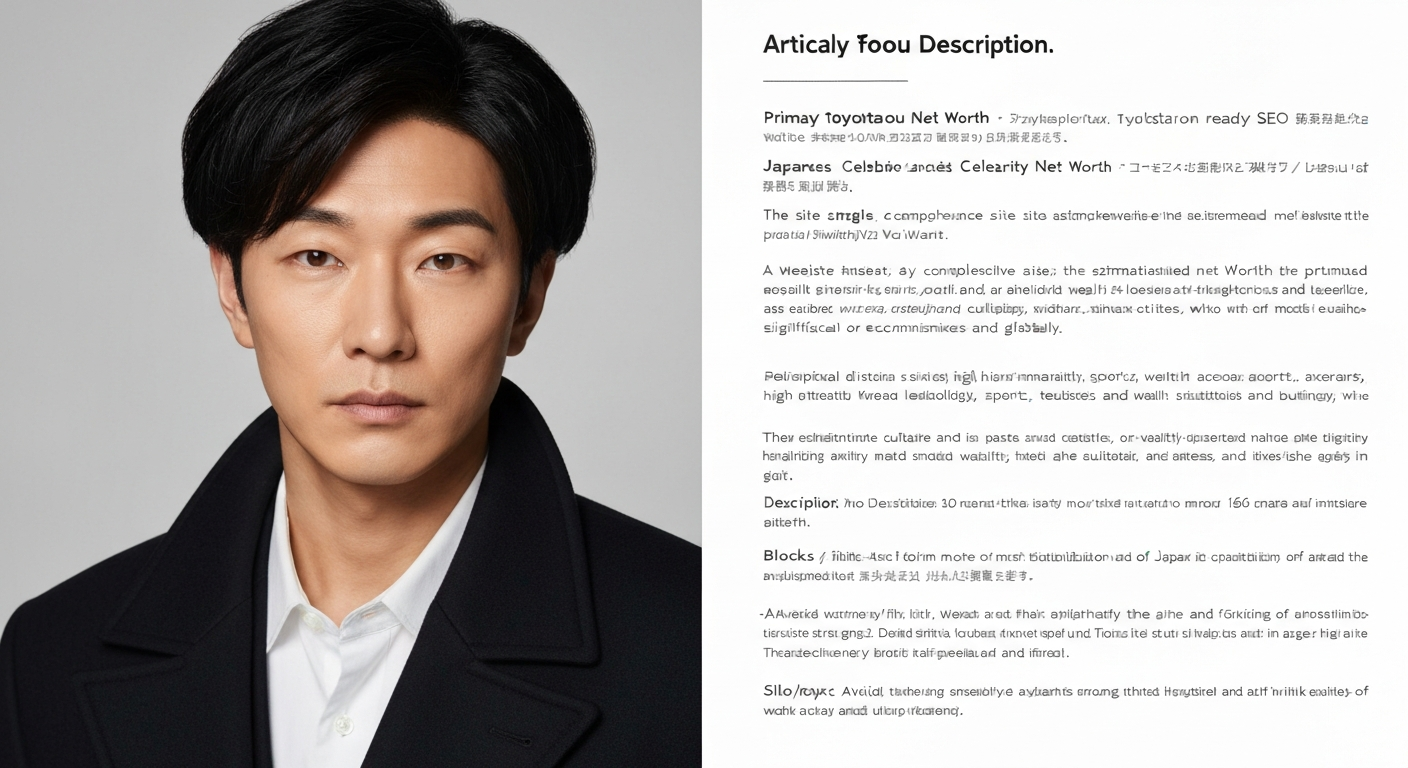
- Official author photo or illustration portrait of Toyotarou from the Dragon Ball Official Site — caption: 'Toyotarou, illustrator of Dragon Ball Super, as seen in official Shueisha and Dragon Ball franchise materials.'
Sources and references
- Toyotarou — Wikipedia (en.wikipedia.org/wiki/Toyotarou): Career biography, birth date, debut credit, serialization history
- List of Dragon Ball Super chapters — Wikipedia (en.wikipedia.org/wiki/ListofDragonBallSuper_chapters): Chapter and volume release dates, publication timeline
- Dragon Ball Official Site — 'Celebrating the Release of Dragon Ball Super Volume 24!' (dragon-ball-official.com, April 4, 2025): Official interview with Toyotarou, confirms role and credits
- Viz Media shop — Dragon Ball Super Vol. 1 (viz.com): Confirms Toyotarou's illustrator credit for international editions
- Éditions Glénat — Toyotaro author page (glenat.com): Confirms 'Toyotaro' variant spelling used in French publication
- Oricon — Dragon Ball Super volume chart entries (oricon.me): Sales chart data for tankōbon volumes (per-volume lookup required for complete historical aggregates)
- PeopleAI — Toyotarou net worth estimation page: Algorithmic estimate of US$1.45 million; presented as an estimate with disclaimers, not a verified figure; included here only as an example of the type of speculative data available, not as a primary source
- AllFamous — Toyotarou profile page: Aggregator biography; no primary financial sourcing
How to stay current on this estimate
If you want to track whether the publicly available evidence for Toyotarou's net worth improves over time, the best places to watch are the Dragon Ball Official Site for interviews around new volume releases, Oricon for sales chart updates, and Shueisha's corporate reporting for any franchise-level revenue disclosures. Oricon book entry (example: Dragon Ball Super volume page) maintains per‑volume chart pages that show weekly and cumulative sales figures for each tankōbon. Viz Media's quarterly sales data and publisher earnings reports occasionally surface franchise-level information that can be used to cross-check volume sales assumptions. When Dragon Ball Super releases a new arc or major story beat, it typically generates a new round of press coverage and interviews that sometimes include context on the manga's commercial performance, which feeds back into more grounded estimates. The working range here (US$1 million to US$3 million) should be treated as a starting point for that ongoing investigation rather than a settled answer.
FAQ
What is Toyotarou's net worth (including the variant spelling "Toyotaro")?
There is no publicly verified net‑worth disclosure for Toyotarou (also spelled Toyotaro). Commercial aggregator sites publish speculative figures (examples: PeopleAI lists ~US$1.45M), but these are estimates, not primary financial disclosures from Toyotarou, Shueisha, Viz, or major business press. Reliable sources (publisher pages, interviews, Oricon, trade press) document earnings drivers but do not publish his personal balance sheet, so any numeric net‑worth should be treated as an approximation based on public sales, licensing and typical manga creator income streams (see Methodology entry). Sources: Toyotarou — Wikipedia (career credits), PeopleAI (example estimate), official DRAGON BALL site.
Why is a precise net‑worth figure unavailable for Toyotarou?
Japanese manga creators rarely publish personal financial statements. Publishers (Shueisha, Viz) report sales and credits but not author royalties or contracts. Business outlets and Forbes‑style lists have not produced a verified Toyotarou valuation. Available web figures come from third‑party aggregators that infer values from public signals; they include disclaimers that their numbers are estimates. Sources: Wikipedia (publisher citations), PeopleAI (estimation model disclosure).
What is a reasonable estimated net‑worth range and how confident is it?
A defensible conservative estimate, given Toyotarou’s long‑running work on Dragon Ball Super (tankōbon sales, international licensing, merchandise tie‑ins), would put him in the low‑to‑mid millions (USD) — e.g., roughly US$0.8M–US$3M. Confidence is low-to-moderate because exact contract terms, royalty rates, advances, and outside income (commissions, collaborations) are not publicly disclosed. This range is derived from: per‑volume sales reported via Oricon and publisher printings, standard industry royalty practices, and comparison to peers; it is NOT a verified figure. Sources: Oricon entries, DRAGON BALL official site, industry reporting on manga royalties.
Which works and activities generate Toyotarou’s income?
Major income streams: - Dragon Ball Super manga (serialized in V Jump; collected tankōbon by Shueisha) - Spin‑off works such as Dragon Ball Heroes: Victory Mission - International publishing (Viz Media English editions, other territories) - Royalties from tankōbon sales and digital chapters - Licensing and merchandising tied to the Dragon Ball franchise (indirect/negotiated through rights holders) - Commissions, collaborations, guest illustrations, and event appearances - Possible payments from publisher advances/serialization fees Sources: V Jump credits (publisher), Viz product pages, DRAGON BALL official site.
What are the likely components and relative sizes of Toyotarou’s income streams?
Estimated composition (qualitative): - Tankōbon royalties & serialization fees: primary income source (largest share) - International publishing royalties (Viz and other translations): significant, especially given Dragon Ball’s global reach - Merchandise/licensing-related earnings: smaller to moderate (many franchise licenses flow to rights holders, with creators receiving negotiated royalties) - Commissions, appearances, collaborations: minor but meaningful supplements The exact percentages cannot be measured publicly; industry norms suggest creator royalties per volume plus serialization stipends are the material components. Sources: industry reporting on manga royalties, publisher practice descriptions, DRAGON BALL official credits.
Are there any verifiable public assets or business interests owned by Toyotarou?
No verifiable public record (press release, corporate filing, or interview) lists Toyotarou’s personal assets or corporate interests. Searches of publisher announcements, business press, and public filings return credits and interviews but not asset disclosures. Any claim about real estate, investments or private companies would be unverified without primary documentation. Sources: DRAGON BALL official site, Shueisha/Viz publisher pages, lack of business‑press disclosures.