
Chef Ming Tsai's net worth is estimated at around $10 million as of April 2026. That figure comes primarily from Celebrity Net Worth, the most widely cited aggregator for his profile, but the honest answer is that no one outside his accountant knows the exact number. What we can do is look at his income streams, business history, and major milestones to stress-test that estimate and understand whether it feels high, low, or about right. Spoiler: for a chef who has run restaurants, hosted a long-running PBS show, launched a product line on HSN, founded a food startup, and published cookbooks, $10 million is a plausible and likely conservative floor.
Chef Ming Tsai Net Worth: Estimate, Sources, and Income Breakdown

Takeshi Yamamoto
4 Apr 2026
What Ming Tsai is actually known for
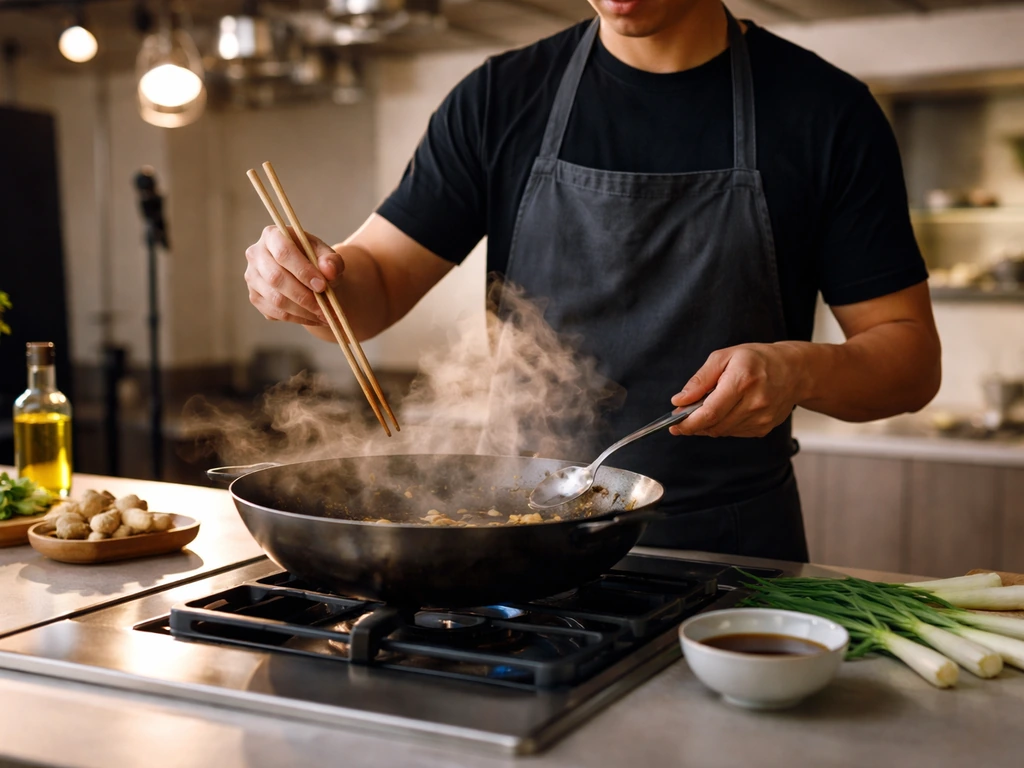
Ming Tsai built his reputation on the idea that Eastern and Western cooking techniques belong in the same kitchen. He became a recognizable face on Food Network as the 1998 Emmy Award-winning host of "East Meets West with Ming Tsai," a show that demonstrated his formal training (he holds degrees from Yale and Le Cordon Bleu) and his ability to translate complex culinary ideas into approachable TV content. That Emmy win was not just a trophy: it established him as a bankable television personality at a time when the celebrity-chef economy was just beginning to take shape.
In February 1998, he and Polly Talbott opened Blue Ginger in Wellesley, Massachusetts, a restaurant that earned consistent critical praise and ran for nearly two decades. In early 2013 he opened Blue Dragon in Boston's Fort Point neighborhood, expanding his restaurant footprint. Both restaurants have since closed (Blue Ginger in June 2017, Blue Dragon in May 2020), but together they gave him roughly 22 years of restaurant operating experience and the credibility to build a brand that stretched well beyond the dining room.
His PBS show "Simply Ming" first aired on October 4, 2003, and has continued running ever since, making it one of the longer-running chef-hosted cooking programs on American public television. The show is produced by WGBH Boston and his own company, Ming East-West, LLC, and distributed by American Public Television. That production company arrangement matters for the wealth discussion, as we'll get into shortly.
Why the numbers you see online don't always agree
If you've searched "chef ming tsai net worth" and seen figures ranging from $5 million to $20 million depending on the site, you're not imagining things. Net-worth databases work very differently from the kind of rigorous financial disclosures you'd see from a publicly traded company. Most aggregator sites (Celebrity Net Worth being the most prominent example) claim proprietary algorithms, but Wikipedia has noted that The New York Times found no computer scientists were actually employed at Celebrity Net Worth. That doesn't mean their estimates are useless, but it does mean they're educated guesses built from public signals, not audited balance sheets.
The more rigorous approach, used by outlets like Forbes for their billionaire and rich lists, involves valuing private businesses by coupling estimates of revenue and profit with price-to-earnings or price-to-sales multiples from comparable public companies, then applying a liquidity discount (often around 10%) for assets that can't be instantly sold. Bloomberg's methodology similarly uses a mix of public and private data, deriving estimates from reported information and live comparisons to public competitors. The challenge with someone like Ming Tsai is that his businesses are all private, so analysts have to work backward from visible signals: restaurant reviews, foot traffic estimates, HSN sales figures, TV licensing deals, and so on. Because those inputs are uncertain, different analysts land on different numbers.
It's also worth knowing that net-worth figures are snapshots, not real-time dashboards. A figure published in 2022 won't automatically reflect the impact of, say, a new frozen-meal brand launched in 2025. Always check when a given estimate was last updated before treating it as current. This is a pattern you'll notice across wealth profiles of entrepreneurs in any industry, from Stephen Ibaraki's net worth as a tech-sector figure to entertainers whose income fluctuates year to year.
The realistic net-worth range and what drives it

Working from Celebrity Net Worth's $10 million figure as a baseline, a reasonable range for Ming Tsai as of April 2026 is $8 million to $15 million. The lower bound reflects the fact that both his major restaurants have closed, removing what was likely a significant asset from his balance sheet. The upper bound accounts for the ongoing PBS production business, multiple active consumer product lines, cookbook royalties, speaking fees, and equity in newer ventures. His 2025 launch of Mings, a frozen meal line sold nationwide, and the earlier success of MingsBings (his plant-based food startup, founded March 2020, which became the Official Bing of the Boston Red Sox) suggest he's been actively reinvesting in new revenue streams rather than winding down.
The key variable that's hard to pin down is the valuation of Ming East-West, LLC. That company holds the "Simply Ming" trademark, produces the PBS show, and appears in USPTO filings under housewares and glass categories, indicating it also covers consumer goods licensing. HSN’s storefront page for “Ming Tsai” includes the Simply Ming collection of kitchen tools and utensils, including cookware and accessories the "Simply Ming" trademark. If the show generates meaningful licensing fees through American Public Television distribution and the trademark underlies product lines sold at retail or on HSN, the LLC alone could represent several million dollars in enterprise value, even before accounting for personal savings and real estate.
Breaking down the income streams
Television and production

"Simply Ming" is the cornerstone of his ongoing earnings. Because Ming Tsai holds an executive producer credit and the show is produced through his own LLC, he earns on both the talent and the production side, a structure that gives him more upside than a typical on-camera host paid a flat fee. PBS shows don't command the same licensing rates as cable, but American Public Television distribution means the show runs on hundreds of stations nationally, and the back catalogue can be licensed for streaming. Over 20-plus seasons, cumulative TV-related income from production fees, licensing, and syndication likely represents a significant portion of his overall wealth.
Restaurants (historical)
Blue Ginger and Blue Dragon are closed, but their contribution to his net worth didn't disappear with the closures. Nearly two decades of restaurant revenue built cash reserves, brand equity, and the credibility that underpins his product and speaking businesses today. Fine-dining restaurants at the level Blue Ginger operated can generate annual revenues in the $3 million to $7 million range depending on size and occupancy, though net margins in the restaurant industry are notoriously thin (typically 3 to 9% for sit-down restaurants). The closure of Blue Ginger in 2017 and Blue Dragon in 2020 (likely impacted by COVID-19) would have removed ongoing income but may have returned capital tied up in leases and equipment.
Consumer products and licensing
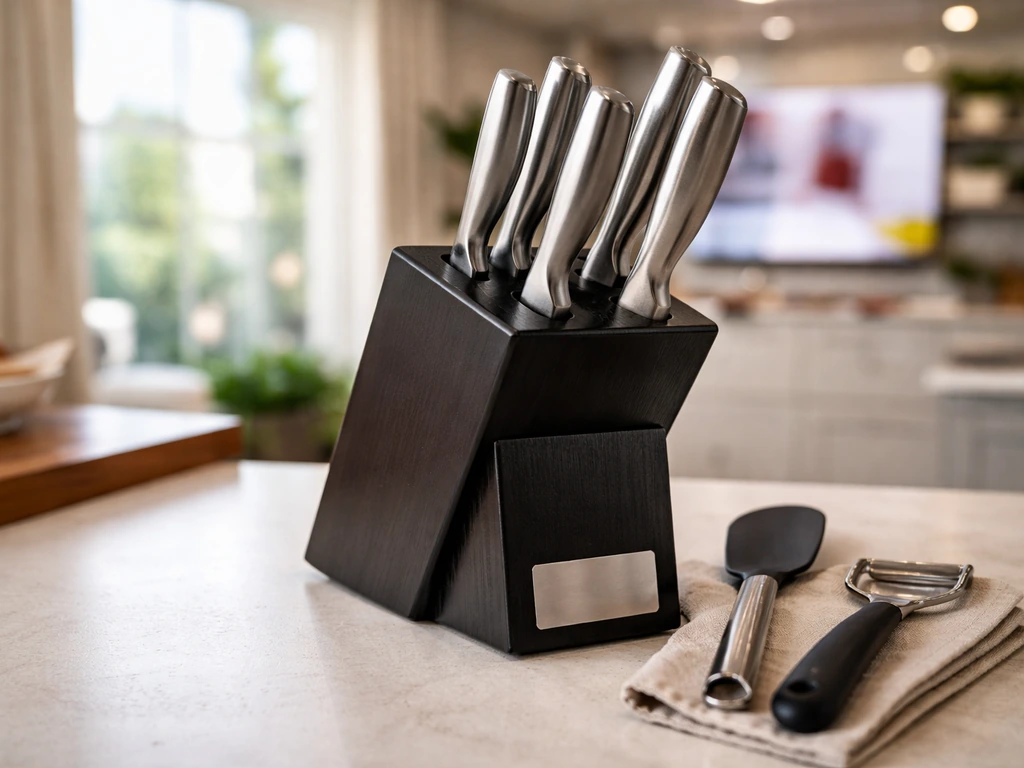
This is an underappreciated part of his income story. Ming Tsai unveiled a collection of Simply Ming kitchen tools on HSN, including knife sets and other kitchen tools, which indicates a product licensing deal with retail distribution. HSN deals for celebrity chefs typically involve royalty agreements based on sales volume, and a well-performing HSN kitchen line can generate hundreds of thousands to several million dollars in royalties over its run. Add in the 2025 nationwide launch of the Mings frozen meal line and the MingsBings startup, and you have an active consumer-goods business that represents both current income and potential future equity value if any of those brands scale or attract acquisition interest.
Cookbooks and publishing
Ming Tsai has published multiple cookbooks over the years. "Simply Ming One-Pot Meals" is one example, tied directly to the TV show's popularity around 2010. Cookbook advances for established celebrity chefs can range from $100,000 to $500,000 per title, with ongoing royalties (typically 10 to 15% of retail price) as long as the book stays in print. His library of titles, combined with continued TV exposure, likely produces modest but steady annual royalty income.
Speaking, appearances, and endorsements
Celebrity chefs at Ming Tsai's recognition level typically command $20,000 to $50,000 per keynote appearance, and he's been active on the speaking circuit for years. Corporate event appearances, culinary festivals, and brand partnership work (including the Red Sox partnership for MingsBings) add incremental income that's hard to quantify but real. This kind of income stream is common across high-profile cultural figures in both American and Japanese entertainment and business contexts, where personal brand translates directly into appearance fees.
What we know about his assets and lifestyle
Here is where the line between public fact and speculation gets blurry, and it's important to be clear about which is which. What is publicly known: Ming Tsai has been based in the Boston/Wellesley, Massachusetts area for decades, which is one of the more expensive real estate markets in the United States. Median home prices in Wellesley regularly exceed $1.5 million, so his primary residence, if he owns it, likely represents a substantial asset. Beyond that, there are no publicly reported figures for his vehicle collection, investment portfolio, or secondary properties.
What is speculative: some profile sites list lifestyle details like luxury cars or multiple properties, but without sourced documentation these should be treated as educated guesses based on income level rather than verified facts. His public persona is more focused on food entrepreneurship and advocacy (he's been outspoken about food allergy awareness) than conspicuous consumption, which makes lavish lifestyle reporting feel less grounded than it might for, say, a pop star or professional athlete. For context, wealth profiles of traditional Japanese performing artists like Ebizo Ichikawa similarly rely on professional earnings signals rather than direct asset disclosure.
A timeline of wealth milestones
| Year / Period | Milestone | Likely Net-Worth Impact |
|---|---|---|
| 1998 | Emmy win for "East Meets West"; Blue Ginger opens | Brand value established; restaurant income begins |
| 2003 | "Simply Ming" launches on PBS via Ming East-West, LLC | Recurring TV production and licensing income begins |
| 2010 (approx.) | "Simply Ming One-Pot Meals" cookbook; HSN kitchen tool line | Publishing royalties + retail product licensing revenue |
| 2013 | Blue Dragon opens in Boston's Fort Point | Second restaurant expands revenue but also increases overhead |
| 2017 | Blue Ginger closes after 19 years | Loss of primary restaurant income; capital potentially freed from lease obligations |
| 2020 (March) | MingsBings plant-based food startup founded | New equity stake in consumer food brand |
| 2020 (May) | Blue Dragon closes (likely COVID-related) | Second restaurant income ends; focus shifts fully to products and media |
| 2021–2023 | MingsBings becomes Official Bing of the Boston Red Sox | Brand visibility boost; potential licensing/sponsorship revenue |
| 2025 | Mings frozen meal line launches nationwide | New national distribution channel; significant scaling potential |
The pattern here is a classic entrepreneur arc: build a primary business (restaurants + TV), use that platform to layer on product lines and licensing, then pivot when the original businesses close toward asset-light income streams (speaking, TV production, consumer brands). The 2020 restaurant closures likely dipped his net worth temporarily, but the post-2020 period looks like deliberate reinvention rather than decline. This kind of career trajectory is worth watching because the Mings frozen meal launch in 2025 is the kind of milestone that, if successful at national scale, could meaningfully push the upper bound of that $8M to $15M range higher within the next few years.
How to verify and update this estimate yourself
If you want to check this figure again six months from now or cross-reference it against other sources, here's how to do it practically. Celebrity Net Worth is the most commonly updated aggregator for chef-level celebrities and is a reasonable starting point, but always note the date their figure was last updated. If it's more than two years old, factor in any major business events (new brand launches, show cancellations, restaurant openings or closures) that have happened since.
For a more grounded sanity check, look at business signals directly. Is "Simply Ming" still in production? (Check PBS and WGBH listings.) Is the Mings frozen line still on shelves and expanding? Is MingsBings still operating and signing new partnerships? Are there new cookbook deals or HSN appearances? These operational signals tell you whether his income streams are growing, stable, or contracting, which is more useful than any single dollar figure. This approach mirrors how analysts verify wealth for private-business owners across industries, including creative entrepreneurs whose income profile resembles someone like Eikichi Yazawa, whose net worth is tied to ongoing touring, licensing, and brand activity rather than a single employer.
Red flags to watch for: if a site lists a dramatically higher figure (say, $50 million or more) without citing any source, that's almost certainly an error or a copy-paste from a similarly uncited site. The same goes for figures that are suspiciously round or that haven't changed in years despite obvious business activity. Also be wary of sites that conflate different people with similar names: there are other prominent figures named Tsai in finance and business, and their wealth profiles sometimes get tangled with Ming Tsai's in poorly maintained databases.
- Start with Celebrity Net Worth for a baseline, but note the update date.
- Cross-check against any recent business news: new product launches, restaurant openings, TV renewals, or major partnerships.
- Search his official site (ming.com) to see which brands and products are currently active.
- Use USPTO or Justia trademark databases to see if Ming East-West, LLC has filed new marks (a signal of new business activity).
- Check PBS and American Public Television listings to confirm "Simply Ming" is still in active production.
- Apply a healthy skepticism to figures with no source cited, figures that haven't been updated in several years, and figures that are dramatically out of line with comparable chefs at his career stage.
Putting it all together
Ming Tsai's $10 million estimate from Celebrity Net Worth is a defensible number, and $8 million to $15 million is the realistic range you should work with as of April 2026. The low end reflects the restaurant closures and the uncertainty around new ventures. The high end reflects the ongoing PBS production business through Ming East-West, LLC, the HSN product history, MingsBings' growing brand profile, and the 2025 Mings frozen meal launch. He is not in the ultra-wealthy category, but he represents a textbook case of a chef who converted TV visibility into a diversified business portfolio, which is exactly how culinary figures sustain wealth after the peak restaurant years. Comparing his trajectory to entrepreneurial wealth-builders across creative industries, including manga creators like Keisuke Itagaki or food-adjacent figures like Chef Izu, illustrates how personal brand, media presence, and product licensing combine to create durable income that outlasts any single venue or show.
The most useful takeaway: treat the $10 million figure as a reasonable estimate with meaningful uncertainty on both sides, and revisit it whenever a major new business event happens. Right now, the Mings frozen meal launch is the most significant variable to watch. If that brand achieves real national scale, the upper bound of his net worth estimate is likely to be revised upward in the next credible update cycle.
For those curious how this kind of wealth profile compares across creative and entrepreneurial figures on this site, it's worth noting that public-facing cultural figures rarely have clean, verifiable net-worth figures regardless of their field. Whether you're looking at Paru Itagaki's net worth as a manga artist or Mai Ikuzawa's net worth as a performer, the estimation methodology is structurally similar: triangulate from known income streams, apply industry benchmarks, and flag what's confirmed versus inferred. Ming Tsai's profile is no different, just with more public business data to work with than most. Similarly, even traditional arts figures such as Takashi Iizuka illustrate how longevity and diversified output, rather than a single peak moment, tend to define sustainable wealth in creative fields.
FAQ
Why do net worth websites disagree so much on Chef Ming Tsai’s number?
A net worth estimate depends heavily on when the number was last updated and what the analyst assumes about privately held assets, especially Ming East-West, LLC. If you see a figure that is much higher than $15 million, check whether it is labeled as an estimate, includes any explained methodology, and has a recent update date tied to events like the Mings frozen meals launch.
What’s the biggest factor that makes Ming Tsai’s net worth hard to verify?
Because his main operating businesses are private, the most important hidden variable is the valuation of his production and trademark-owning company, Ming East-West, LLC. Public signals like PBS distribution and product licensing can inform revenue potential, but there is no audited balance sheet, so different analysts can easily model different enterprise values.
Could his net worth drop even if “Simply Ming” is still popular?
Net worth can fall even if income from TV and licensing stays steady, since it includes asset values and investment performance, not just earnings. Restaurant closures can reduce cash flow and also reduce the value of brand-related assets and any remaining working capital, which is why net worth snapshots can lag behind day-to-day success.
Does launching a new product line like Mings automatically raise net worth right away?
Potentially, yes, but only indirectly and typically with a delay. If the frozen meal line or other retail brands perform strongly, it can increase profit and also raise the perceived value of his underlying companies, which may push net worth up over time rather than immediately.
How can I sanity-check the net worth estimate without relying on a single website number?
Look for operational confirmations, not just headlines. For example, if Simply Ming is still producing new episodes, if the Mings frozen line is still widely distributed, and if HSN listings show active inventory and promotions, those are practical indicators that revenue streams remain live and not merely past projects.
Do wealth estimates usually treat all his business value as personal wealth?
If you want to compare estimates, separate “personal net worth” from “company value.” Some sites may effectively treat the valuation of his companies and brands as entirely personal holdings, which can overstate his net worth if profits, equity, or licensing rights are structured across entities.
Which income streams are most likely to change year to year for Ming Tsai?
Speaking and cookbook royalties are usually smaller than brand and licensing value, but they can still matter for short-term changes. If he has more frequent speaking engagements, new cookbook releases, or expanded licensing tied to existing IP, you may see incremental increases that are not obvious unless the estimate is updated often.
Do closed restaurants like Blue Ginger and Blue Dragon still affect his net worth today?
Yes, restaurants can still influence net worth after closure because the earlier run can leave behind cash reserves, brand reputation, and licensing leverage. However, closures can also reduce future earning capacity, so the effect on net worth depends on how much value was already extracted and what assets remained versus were sold or depreciated.
What are the red flags that a Chef Ming Tsai net worth estimate might be wrong?
Watch out for numbers that are round, uncited, or repeat the same figure across many sites without a clear update cycle. Also verify that the profile is actually for Chef Ming Tsai, since name confusion with other Tsai figures can lead to incorrect aggregation.
How can I tell if a net worth figure is outdated?
One practical approach is to track specific milestones and then compare whether the estimate changed after those milestones, for example, the start of MingsBings partnerships, continued Simply Ming production, or the expansion of Mings frozen meals distribution. If an estimate stays static across major events, it may be stale rather than accurate.