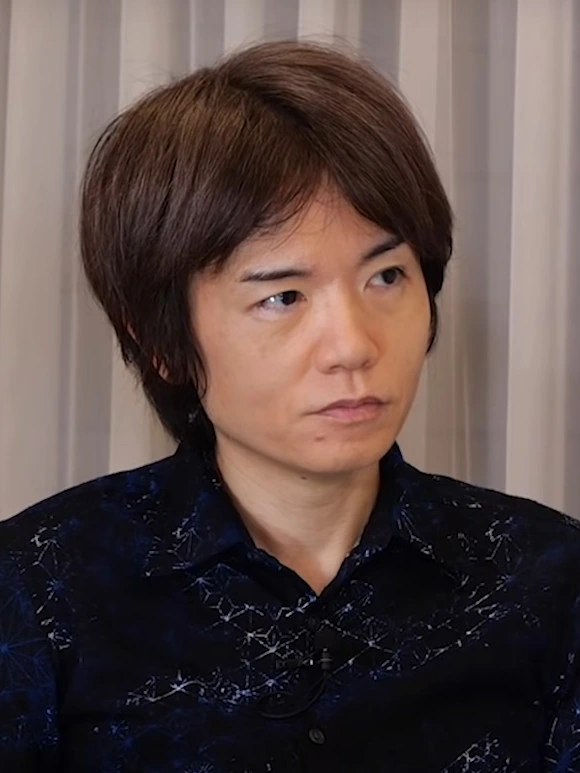
Masahiro Sakurai's net worth is most realistically estimated in the range of $8 million to $15 million USD as of April 2026. That range is wider than most people want to hear, but it's honest, and it reflects the genuine uncertainty that comes with estimating the wealth of a Japanese creative industry figure who has never disclosed personal financials publicly. What we do know is that his career spans more than three decades of high-impact game design work, a long-running independent consultancy structure, and a very deliberate relationship with money that doesn't fit the typical "game celebrity" mold.
Masahiro Sakurai Net Worth: Estimate Range and How to Verify

Takeshi Yamamoto
12 Apr 2026
Who Masahiro Sakurai is and how his career built his wealth
Sakurai started at HAL Laboratory in the late 1980s, where he created Kirby's Dream Land and directed the original Kirby series. He then developed the first Super Smash Bros. for Nintendo 64, where he served as director and lead designer, a project that turned into one of Nintendo's most enduring franchises. In August 2003, he resigned from HAL Laboratory, making headlines in the gaming press at the time. Two years later, in September 2005, he and his wife Michiko formally founded Sora Co., Ltd. (also referenced as Sora Ltd.) as a vehicle for freelance and contracted creative work.
From 2005 onward, Sakurai has worked as an independent contractor brought back repeatedly by Nintendo to lead every mainline Super Smash Bros. entry, Brawl, Smash for Wii U/3DS, and Super Smash Bros. Ultimate. This is a fairly unusual arrangement in the Japanese game industry, where most major franchise directors remain salaried employees of large publishers. Sakurai's independence means his compensation is structured as contracted project fees and royalty-linked payments, not a stable salary. He has confirmed publicly that he typically doesn't receive payment while developing a game, his income is tied to sales performance after the title ships. By April 2022, he had already begun work on a new game project, and in the October 2025 timeframe, GamesRadar+ reported that a 160-page educational manga about his life and art was being released under his supervision, adding another media revenue strand to his profile.
Between 2022 and 2024, Sakurai ran a YouTube channel called "Masahiro Sakurai on Creating Games", an educational series aimed at aspiring developers. He did not monetize it. He spent approximately 90 million yen on production (roughly $600,000 to $630,000 USD depending on exchange rate), and in his channel finale, described the entire investment as something he "didn't see a penny in return" from. This is a remarkable data point for net-worth modeling: it tells us he had the liquid capital to absorb a multi-hundred-thousand-dollar outlay without it being catastrophic, but it also confirms the channel itself was not an income source.
The realistic net worth estimate and what it's based on

Estimates across celebrity net-worth aggregator sites vary wildly. Sites like CelebsMoney, PeopleAI, and PennBookCenter have published their own figures for Sakurai, but none of these sources disclose transparent methodology or primary sourcing. PeopleAI actually includes a visible disclaimer that its values are estimations based on YouTube monetization models and are "by no means accurate", which is a rare but telling admission. Nichesss and similar list-format sites quote specific numbers without showing any inputs. These figures are best treated as rough guesses, not verified data.
A more grounded approach builds the estimate from what we can reason about. Super Smash Bros. Ultimate alone sold over 35 million copies as of the most recent Nintendo reporting periods, making it one of the best-selling games in Nintendo's history. Even modest royalty or milestone-based bonus structures tied to that performance would produce significant income. Layer in Brawl and Smash for Wii U/3DS, plus earlier Kirby titles, and you're looking at a career that spans some of the highest-grossing Nintendo franchises of all time. Japan's creative industry norms tend toward lower individual wealth accumulation relative to Western equivalents at the same level of impact, but Sakurai's independent structure through Sora Ltd. gives him more favorable economics than a salaried employee would have.
The $8M–$15M range reflects a conservative read of project fees and royalty-linked income accumulated over 20-plus years of independent contracting, minus known expenses (like the YouTube channel), taxes in Japan, and the operational costs of running Sora Ltd. as a small company. It could be higher if Nintendo's contractual terms included performance bonuses tied to Ultimate's extraordinary sales. It could be lower if his income model is more purely fee-based with limited backend participation. The honest answer is that without a disclosed balance sheet, the range is the best tool available.
Breaking down where the money actually comes from
Game design fees and project contracts

The biggest income driver across Sakurai's career has almost certainly been his contracted work on Smash Bros. titles. Each of these games took multiple years to develop, Ultimate, for instance, ran from approximately 2015 to 2021 when including DLC. A senior creative director working independently on a flagship Nintendo franchise would command contract terms well above typical Japanese industry salaries. Japanese game director salaries at large studios typically range from around 8 to 15 million yen annually for senior roles; as an independent, Sakurai would have negotiated from a position of unique leverage given the franchise's commercial importance.
Sales-linked and performance-based income
Sakurai has directly confirmed that his compensation is tied to a game being finished, on sale, and generating revenue. This isn't a royalty arrangement in the traditional publishing sense, but it means his income is at least partially performance-linked. When Ultimate became one of the all-time best-selling Nintendo titles, that milestone structure would have triggered substantially higher earnings than the same model on a moderately successful title.
Publishing and media work

Beyond games, Sakurai has a long history with Famitsu, contributing a column for many years. The October 2025 manga announcement represents a newer media venture with potential licensing income. His YouTube channel, while not monetized, effectively functioned as a prestige project, the kind of investment that builds long-term brand value rather than short-term cash flow. Think of it as equivalent to an executive publishing a book at a loss to establish authority.
Endorsements and appearances
Sakurai is not publicly known for major brand endorsements in the way that some Japanese celebrities pursue. His public persona is closely tied to his creative identity rather than consumer product promotion, which is consistent with his general avoidance of monetizing his YouTube audience. Occasional paid speaking appearances and industry events likely contribute marginally to his income but are not a primary driver.
Wealth profile: what his lifestyle and choices tell us

One of the more useful signals for contextualizing Sakurai's wealth is his demonstrated financial behavior. Someone who can voluntarily spend 90 million yen (roughly $600,000+) on a passion project with no intent to recoup, and who describes that outcome with equanimity rather than distress, is clearly operating from a position of financial comfort. At the same time, Sakurai has been consistently private about his lifestyle and has not made public displays of wealth accumulation that sometimes accompany high-profile Japanese cultural figures.
In the Japanese creative industry context, wealth accumulation tends to be quieter and more gradual than in Western entertainment. A producer or director at Sakurai's level of cultural impact in Japan would typically hold assets in real estate, savings instruments, and investment accounts rather than visible luxury goods. The typical wealth-building pathway for an independent Japanese creative professional of this profile runs through reinvested fees, property, and modest portfolio holdings, not celebrity spending patterns. Comparing his profile to someone like Masaaki Sakai, another prominent Japanese entertainment figure who built his wealth through a combination of performance work and smart independent structuring, illustrates how creative professionals in Japan can accumulate meaningful assets without high-profile financial visibility.
It is also worth noting the risk of a common conflation error: there is a publicly traded Japanese company called Sakurai Ltd. (ticker TYO:7255) that appears in financial databases and has its own shareholder breakdown. This is a manufacturing company, completely unrelated to Masahiro Sakurai or Sora Ltd. Similarly, a company called SAKURAI LTD. (株式会社桜井製作所) has a corporate web presence at sakurai-net.co.jp. Neither has any connection to the game designer. Net-worth searches that pull in these entities are a red flag for low-quality sourcing.
How to verify net worth claims and spot the red flags
The most important thing to understand about celebrity net-worth figures is that almost none of them are verified from primary sources. Even for public figures, personal wealth data is rarely disclosed. Here is a practical framework for evaluating any Sakurai net-worth figure you encounter online.
- Check whether the source cites a primary or secondary source. If the page says something like "according to reports" with no link, or links only to another estimate site, it's circular — not evidence.
- Look for a methodology explanation. Does the site explain whether they're using salary data, royalty estimates, or career income modeling? If it's just a number with no derivation, treat it as a guess.
- Watch for wildly specific numbers. A claim like "$14,350,000" implies precision that no public source can actually support. Round ranges are more honest than fake precision.
- Check the date. Net-worth estimates from 2019 or 2021 are stale. Sakurai's income situation changed significantly when Ultimate's DLC concluded, when his YouTube channel wrapped, and as new projects are revealed.
- Don't confuse salary with net worth. A high-earning creative director who reinvests, pays taxes in Japan, and funds personal projects has a very different net worth than their gross annual income would suggest.
- Watch for the wrong Sakurai. Financial databases referencing TYO: 7255 or sakurai-net.co.jp are pulling data from completely unrelated companies — this is a specific, recurring error in automated net-worth tools.
Credible sources for background context include Wikipedia's career timeline, MobyGames credits, official Nintendo press materials, and journalism from outlets like Nintendo Life, Gematsu, GamesRadar+, and Automaton West. None of these will give you a confirmed net-worth figure because that figure doesn't exist in public records, but they give you the career data needed to reason about income scale. For comparison, researching the financial trajectory of a figure like Sessue Hayakawa, one of the earliest Japanese entertainment figures to build significant wealth through independent creative structures, shows how important it is to use primary career records rather than recycled estimates when building a wealth profile.
How career milestones shift the estimate over time
Net worth is not static, and for someone with Sakurai's income structure, specific career events move the needle significantly. Understanding those events helps you apply the right estimate for the right time period.
| Career Milestone | Approximate Timing | Estimated Income Impact |
|---|---|---|
| Leaves HAL Laboratory | 2003 | Transition point — income drops briefly before independent structure kicks in |
| Founds Sora Ltd. | 2005 | Establishes formal independent contracting vehicle; marks shift to project-fee model |
| Super Smash Bros. Brawl ships | 2008 | First major income payout under Sora Ltd. structure; Brawl sold ~13M copies |
| Smash for Wii U/3DS ships | 2014 | Second major contract conclusion; combined ~15M copies sold |
| Super Smash Bros. Ultimate ships | 2018 | Largest income event — Ultimate became the best-selling Smash title (35M+ copies) |
| Ultimate DLC concludes (Sora fighter) | Late 2021 | Final milestone payments under Ultimate contract likely triggered here |
| YouTube channel runs and wraps | 2022–2024 | Net negative: |
| New game project announced/in dev | April 2022–present | Pre-revenue phase; income likely minimal until project ships |
| Manga supervision project | Announced Oct 2025 | Modest additional media income stream; not a primary wealth driver |
What this timeline makes clear is that Sakurai's wealth is highly lumpy, it accumulates in large bursts when major titles complete and then plateaus during long development cycles. Right now, in April 2026, he is likely in a development phase for whatever his next project is, which means he's not currently drawing the performance-linked income that characterized the Ultimate years. His net worth at this moment is a product of accumulated past earnings, not current cash flow. This is similar to how we'd evaluate a figure like Kyu Sakamoto, whose legacy wealth was built through a concentrated period of extraordinary commercial success rather than consistent ongoing income.
Comparing Sakurai's wealth profile to peers in the creative industry
Putting Sakurai's estimated range in context helps calibrate whether $8M–$15M sounds right or low. Japanese entertainment and creative figures vary widely in their wealth accumulation depending on how directly they participate in revenue sharing versus salaried work.
| Profile Type | Typical Wealth Range | Key Variables |
|---|---|---|
| Senior salaried game director at major Japanese publisher | $1M–$5M | Limited royalty participation, strong pension, stable but modest upside |
| Independent contracted game director (Sakurai's model) | $5M–$20M | Depends heavily on contract terms and franchise commercial scale |
| Japanese actor/entertainer with long-running roles | $3M–$15M | Variable based on endorsements, TV presence, agency cuts |
| Japanese creative with media diversification (books, TV, games) | $5M–$25M | Higher upside from multiple streams; strong brand equity matters |
Sakurai fits most cleanly into the independent contracted director row, with some upward pressure from his media diversification. A figure like Kentaro Sakaguchi, who built substantial wealth through a combination of acting roles and strategic project choices, illustrates how Japanese creatives at the top of their field can accumulate wealth meaningfully above industry averages when they control their deal structures. The pattern is consistent: independence plus franchise-scale commercial success drives the upper end of wealth estimates.
For further reference, the wealth profiles of Nelson Sakaguchi and Eric Sakas provide additional data points on how professionals working across creative and advisory roles tend to build and hold wealth over multi-decade careers. Meanwhile, looking at an athlete-to-executive trajectory like that of Saku Koivu is a useful reminder that the shape of a wealth-building career matters as much as peak earnings, long, consistent contribution phases tend to produce more durable net worth than short bursts.
What to do next if you want the most current figure
There is no single authoritative source for Masahiro Sakurai's net worth, and that's not going to change unless he discloses it himself or Sora Ltd. is required to file public financials. Given that Sora Ltd. is a private Japanese corporation, public disclosure is unlikely. Here is the most practical approach to staying current:
- Follow Nintendo's official financial reporting for sales milestones on Super Smash Bros. titles — updated sales figures are the best proxy for estimating Sakurai's performance-linked income.
- Track announcements about Sakurai's next project. When a new game ships, expect his net worth estimates to be revised upward as another major income event concludes.
- Monitor Japanese entertainment and gaming press (Famitsu, Automaton, Nintendo Wire) for any interviews where Sakurai references income, spending, or financial philosophy — he has been unusually transparent in a few key moments.
- When you encounter a net-worth figure from an aggregator site, run it through the red-flag checklist above before accepting it. Look for sourcing, methodology, and recency.
- Use the $8M–$15M range as a working baseline for April 2026, and adjust upward if and when his next major project ships and achieves strong commercial results.
The bottom line is that Masahiro Sakurai is genuinely wealthy by any reasonable measure, with a career that has produced some of the most commercially successful games in Nintendo's history. His deliberate choices, independent structure, non-monetized media projects, quieter Japanese-style wealth accumulation, mean the numbers don't flash as brightly as they might for a Western equivalent. The $8M–$15M estimate is grounded, honest about its uncertainty, and based on career data rather than recycled guesses. That's the most useful figure available today.
FAQ
How can I tell whether a “Masahiro Sakurai net worth” number is just recycled from other sites?
Check whether the article shows any inputs (contract details, revenue/royalty assumptions, asset disclosures) or only cites other net-worth sites. If it only states a figure with no calculation method, treat it as non-verifiable, especially when the source repeats the same dollar amount across multiple aggregators.
Does Sakurai’s YouTube channel increase his net worth if it was not monetized?
It likely contributes little to cash flow, but it can still have indirect value, such as brand authority, better deal leverage, and speaking or consultancy opportunities. If you are modeling net worth purely from income, the direct contribution is near zero, but the indirect effects are hard to quantify.
Why does the net-worth range change depending on the year, even if he still works on Smash?
Because his income is described as more performance-linked and lumpy. During long development gaps, cash inflow can be lower, and net worth can plateau while expenses continue. When a major release period finishes and sales ramp, the model should move upward.
Should I treat Sakurai’s compensation as salary, royalties, or contractor project fees for net-worth estimating?
For a practical model, treat it as contractor fees plus post-release performance-linked payments rather than steady salary. That distinction matters because it changes how you allocate income across years (front-loaded around deliverables versus spread through ongoing sales).
Can Sora Ltd. filings help verify Sakurai’s net worth?
Only partially. Even if you find public corporate documents, they do not automatically translate to personal net worth, because (1) profits belong to the company first, (2) money can be retained in the corporation, and (3) Sakurai’s personal ownership stake determines his take. Corporate profit does not equal personal assets.
What is the most common mistake people make when searching for “Sakurai Ltd.” or “Sakurai net worth”?
Mixing up unrelated companies. The article highlights that there are similarly named Japanese entities and a different, publicly listed “Sakurai Ltd.” manufacturing company. If your source references those businesses, it is a red flag that the net-worth claim is based on incorrect identity matching.
If Smash Ultimate sold 35 million plus, why doesn’t every model show a much higher net worth?
Because sales volume does not reveal Sakurai’s exact share. His contract might include milestone bonuses, but it could also limit backend participation. Without published terms, models that assume a large royalty rate will overshoot, while fee-only or limited backend structures keep the personal estimate closer to the mid range.
How should I interpret “active in 2026” versus “currently earning”?
Working on a project does not guarantee immediate income. If his compensation is tied to completion and revenue after shipping, his 2026 work could mean lower cash inflow even while he is professionally active. For net worth, focus on cumulative earnings up to now, not only current activity.
Are paid speaking appearances, Famitsu writing, or educational manga likely to be major drivers of his net worth?
They are probably smaller compared to the core Smash compensation, but they can add incremental income and raise bargaining power. For modeling, you can include them as modest add-ons rather than primary drivers unless you can document large licensing deals or high recurring payments.
How can I sanity-check the $8M to $15M range without access to financial statements?
Use a timeline-based approach: estimate earnings during major release windows, subtract known or plausible personal expense levels, and include taxes and business operating costs for Sora Ltd. Then compare whether the implied asset level is consistent with his ability to fund large outlays (like the 90 million yen channel production) without needing to monetize that project.
If I find a net-worth figure with a very precise number (like $12,345,678), should I trust it more?
No. Precision often signals pseudo-calculation rather than real data. A precise number without transparent assumptions usually reflects guesswork. Ranges are more honest when there is no primary disclosure of income, assets, or liabilities.
What would change the estimate the most going forward?
A publicly known contract shift (for example, higher backend participation or new publishing/licensing arrangements), major new franchise leadership roles with disclosed deal structures, or any evidence about how Sora Ltd. profits are distributed to him personally. Absent that, the estimate should only move gradually within the same uncertainty band.