Sessue Hayakawa's net worth at the time of his death in 1973 is estimated at roughly $500,000 to $2 million, depending on how different sources handle currency conversion, asset assumptions, and which career period they weight most heavily. In today's dollars, his peak earnings alone, reportedly $2 million per year between 1918 and 1921, would translate to somewhere north of $35 million annually. So while the exact figure is genuinely hard to pin down, calling him one of early Hollywood's wealthiest actors is not an exaggeration.
Sessue Hayakawa Net Worth 2026 Estimate and How It’s Calculated

Takeshi Yamamoto
8 Jun 2026
Who Sessue Hayakawa was

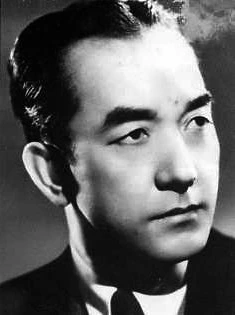
Sessue Hayakawa (June 10, 1886 – November 23, 1973) was a Japanese-born actor who became one of the biggest stars in silent-era Hollywood, a remarkable achievement given the anti-Asian sentiment that defined American society at the time. Born in Chiba Prefecture, Japan, he moved to the United States and broke through with The Cheat in 1915, a Famous Players-Lasky production that reportedly grossed over $120,000 at the box office and turned Hayakawa into a genuine romantic idol for American audiences.
From there, his career moved fast. He founded his own production company, Haworth Pictures Corp. , in 1918 and spent several years producing, directing, and starring in his own films distributed through Mutual Film Corp. After stepping back from Hollywood in the early 1920s, he worked extensively in Europe and Japan before returning to American screens in the sound era.
His most famous late-career role came in 1957 when he played Colonel Saito in The Bridge on the River Kwai, earning him an Academy Award nomination for Best Supporting Actor, a rare honor for a Japanese actor working in English-language cinema at that time. He received his star on the Hollywood Walk of Fame at 1645 Vine Street on February 8, 1960.
Sessue Hayakawa is listed as a Hollywood Walk of Fame honoree, with the star dated February 8, 1960 His received his star on the Hollywood Walk of Fame at 1645 Vine Street on February 8, 1960. .
The realistic net worth estimate (and how we get there)
Here is the honest situation with Hayakawa's net worth: there are no probate records or estate filings that have been made widely available, so every figure you see online is modeled from documented earnings data, not a balance sheet. What we do have is fairly compelling. Wikipedia cites his salary at $5,000 per week in 1915, equivalent to roughly $160,000 per week in 2026 dollars. By 1919, his weekly salary had reportedly settled at $3,500 per week, still enormous for the era. Most significantly, between 1918 and 1921, his production company is reported to have generated around $2 million per year in earnings.
Taking those figures at face value, Hayakawa's cumulative earnings during his peak Hollywood years (roughly 1915 to 1921) would have been substantial by any measure. However, net worth is not the same as gross income. He also spent lavishly, more on that below, and lived through decades of lower-income periods in Europe and Japan before his Bridge on the River Kwai comeback. A reasonable working estimate for his net worth at the time of his death places the range at $500,000 to $2 million in 1973 dollars, which accounts for both his peak accumulation and the likelihood of significant spending and career gaps over 50-plus years.
Where the money came from
Acting fees and studio contracts

Hayakawa's acting salary was genuinely elite for the silent era. The $5,000-per-week figure from 1915 puts him in the company of top-tier Hollywood talent of that period. These were flat fees paid by studios like Famous Players-Lasky, and they represent the most documented slice of his income. His post-war comeback with Bridge on the River Kwai would have brought a second wave of competitive acting fees, though on a much smaller scale relative to inflation.
Haworth Pictures and producer earnings
The biggest income multiplier in Hayakawa's financial story is Haworth Pictures Corp., which he founded in 1918. By controlling production, he captured profits that would otherwise have gone to the studio. The reported $2 million annual figure from 1918 to 1921 reflects this. Hayakawa oversaw what the AFI Catalog describes as eight 'Hayakawa Specials' for Haworth, distributed through Mutual Film Corp. Owning your own production company is exactly the kind of vertical integration that made early Hollywood stars wealthy beyond their acting salaries alone, a business model familiar to Japanese entertainment figures who have since built similar multi-revenue structures.
European and Japanese work
After stepping away from Hollywood in the early 1920s, Hayakawa worked in France, Germany, and Japan, maintaining a professional profile but almost certainly at lower income levels than his peak American years. This period is financially murky, exchange rates, incomplete records, and the economic disruption of World War II all make it difficult to model earnings with any confidence.
Late-career recognition
His Academy Award nomination for Bridge on the River Kwai revived his profile significantly, and the Hollywood Walk of Fame honor in 1960 cemented his legacy. He also appeared in The Big Wave (1961) alongside his wife Tsuru Aoki. These late-career projects contributed meaningful income, but they were unlikely to dramatically shift his overall net worth trajectory.
Assets and how he lived
Hayakawa's lifestyle during his peak years was genuinely extravagant. In 1917, he built a castle-styled mansion at the corner of Franklin Avenue and Argyle Street in Hollywood, which became a local landmark before being demolished in 1956. Before that, historical records place him at 636 N. Hobart Blvd. in Los Angeles as early as 1916, identified as the residence of what surveys describe as the first known Japanese American film star. The castle property alone was a major capital investment, and a major capital expenditure, that signals both his wealth and his willingness to spend it.
Beyond real estate, accounts of his lifestyle describe lavish entertaining, fine clothes, and a social profile that matched or exceeded other top Hollywood stars of the era. It's worth noting that this kind of spending, significant and visible, is exactly what erodes the gap between gross earnings and final net worth over a lifetime. High earners who spend like high earners often end up with net worths that look surprisingly modest relative to their career peak income.
Why different websites give you different numbers
If you search Sessue Hayakawa's net worth right now, you will probably find figures ranging anywhere from a few hundred thousand dollars to numbers in the tens of millions. If you are also wondering about Saku Koivu’s net worth, the same idea applies: different sources often use different assumptions when modeling income and assets. People sometimes search for Masaaki Sakai net worth as a similar celebrity-wealth comparison, but the available evidence and earnings history can differ widely Hayakawa's net worth. If you're specifically comparing figures for Kentaro Sakaguchi net worth, it helps to separate reported income claims from verifiable financial records the way this article does for Sessue Hayakawa. Here is why those numbers diverge so dramatically.
- Inflation methodology: some sites convert his 1918-1921 earnings directly to 2026 dollars (producing very large numbers), while others report the nominal historical figure or work from his estate value at death. These are answering completely different questions.
- Time period selection: a site that anchors its estimate to his peak production-company years gets a wildly different result than one that estimates his holdings at the time of his death in 1973, after decades of spending and career fluctuation.
- Missing records: no confirmed probate filings or tax records are in wide public circulation, so all estimates are modeled, not sourced from primary financial documents.
- Currency conversion for international work: his European and Japanese earnings introduce exchange-rate uncertainty that different sites handle differently or ignore entirely.
- Source recycling: many net worth sites copy each other's figures without independent verification, which means one original (often poorly sourced) estimate propagates across dozens of pages.
The bottom line is that any single number you see presented with false precision, something like '$2.5 million exactly', should be treated with skepticism. A range that accounts for different modeling assumptions is more honest and more useful.
How to verify or cross-check what you find

If you want to build a more grounded estimate yourself, here is a practical approach.
- Start with primary earnings documentation: the Wikipedia entry for Hayakawa cites specific salary figures with enough detail to be cross-referenced. Treat these as a floor for income modeling, not a net worth conclusion.
- Use the AFI Catalog (catalog.afi.com) to verify his filmography and production credits, which helps you identify the years he was most active and likely earning at each level.
- Check the HISTORY channel's coverage of The Cheat for contemporary reporting on box-office performance, which gives you a sense of the commercial scale his films operated at.
- Use a reputable CPI inflation calculator (such as the Bureau of Labor Statistics CPI tool at bls.gov) to convert historical dollar figures to current values, rather than trusting a net worth site's conversion.
- Search newspaper archives (ProQuest Historical Newspapers, Newspapers.com, or the Library of Congress Chronicling America database) for trade press coverage of Haworth Pictures and Hayakawa's production deals — these sometimes contain contract or deal-value reporting.
- Check the Los Angeles County probate records portal or the California State Archives for any estate filings, which would give you the most direct data point on his assets at death.
- For any figure you find on a celebrity net worth aggregator site, check whether the page cites a source. If it does not, treat it as unverified and compare it against at least two independent sources before accepting it.
Putting his wealth in context
Hayakawa's financial story is unusual even within the world of early Hollywood. Most Japanese entertainers of his era had no pathway to studio ownership, the industry structure simply did not accommodate it. His ability to found and run Haworth Pictures was a function of both his enormous popularity and his willingness to operate as a business entity, not just a performer. In that respect, he anticipated a model that later Japanese entertainment figures, producers, multi-hyphenate creators, would eventually adopt more widely.
Compared to contemporaries in the Japanese entertainment world, his financial trajectory looks distinctive. Artists like Kyu Sakamoto, who also achieved major international crossover success, built their wealth in a very different postwar industry structure. Hayakawa's story is really a silent-era Hollywood story first, with a Japanese cultural lens layered on top, which makes direct comparisons to later Japanese celebrities complex. What they share is the pattern of legacy earnings: recognition, award nominations, and cultural longevity create ongoing value in licensing, archival licensing, and retrospective exhibition long after the primary career has ended.
The legacy dimension matters for understanding why people search for Hayakawa's net worth in 2026, more than 50 years after his death. That same kind of curiosity also drives people to look up Masahiro Sakurai net worth today search for Hayakawa's net worth in 2026. His films are held in archives, his name appears in academic and cultural histories of Hollywood, and his Walk of Fame star remains a physical marker of his place in film history.
None of that translates into a living estate generating current income, but it does explain the ongoing public interest in quantifying what his career was worth, and why that question deserves a careful, grounded answer rather than a recycled number from an unverified source. If you are specifically looking at Nelson Sakaguchi net worth, you can apply the same idea: compare sources, check what data they use, and treat single-number claims cautiously net worth in 2026.
| Metric | Historical figure | Approx. 2026 equivalent |
|---|---|---|
| Weekly salary (1915) | $5,000/week | ~$160,000/week |
| Weekly salary (1919) | $3,500/week | ~$82,000/week |
| Annual production earnings (1918-1921) | $2,000,000/year | ~$35,000,000+/year |
| The Cheat box office (1915) | $120,000+ | ~$3.8 million+ |
| Estimated net worth at death (1973) | $500,000 – $2,000,000 | ~$3.5M – $14M in 2026 dollars |
These figures are estimates built from documented earnings data, not confirmed balance-sheet records. Use them as a framework for understanding his financial scale, not as precise conclusions.
FAQ
Why do some sites claim Sessue Hayakawa’s net worth in 2026, even though he died in 1973?
Not in a straightforward way. After his death there were no widely published probate filings available, so most “net worth in 2026” numbers are extrapolations of peak earnings plus assumed spending and investment returns, rather than a calculation based on an estate that survived to generate income.
What assumption most often causes the biggest swings in Sessue Hayakawa net worth estimates?
Look for what’s being “grown” in the model. If the number increases dramatically versus his 1973 estimate, the site is likely assuming strong investment returns, lower taxes and expenses than typical high earners, or using today’s inflation only for a partial period, which can swing results by many multiples.
How should I convert Hayakawa’s 1973 net worth range into today’s dollars?
The $500,000 to $2 million range reflects net worth at death in 1973 dollars, so converting to present value is sensitive to the inflation index and whether the site applies inflation to the whole range or just a midpoint. If a source presents a single converted number without showing the method, treat it as low-confidence.
Why can Hayakawa’s high weekly salary still lead to a relatively modest net worth at death?
Those weekly figures are evidence of gross pay, not final wealth. To estimate net worth, you must subtract non-income realities such as production costs (for Haworth), ongoing lifestyle spending, legal or operating expenses, and long career gaps where earnings dropped.
Does owning Haworth Pictures guarantee a higher net worth for Hayakawa, or is it more complicated?
Haworth Pictures likely boosted his wealth because it captured profits tied to producing and distributing, but it does not mean unlimited gains. When models ignore the costs of production, distribution fees, and potential underperformance of specific releases, they often overstate what the annual “earnings” imply for his personal net worth.
How can company profits differ from personal net worth in a case like Haworth Pictures?
Yes. Some estimators apply a “salary to net worth” shortcut, then fail to account for equity versus cash. If Haworth earnings included returns that were reinvested into future projects or retained within the company, they would not instantly become personal net worth.
Could Hayakawa’s film legacy generate ongoing income today that would raise his “net worth” figure?
There can be some upside from legacy value, but not in the sense of a living estate. Any modern value tied to his work typically flows to rights holders, archives, or licensing partners, and it depends on who controls the rights decades later, which is not captured by generic “net worth” calculators.
How much do late-career projects like The Bridge on the River Kwai realistically change his net worth estimate?
It can, but the effect is usually smaller than people expect. If later roles brought additional pay, the bigger financial driver is still his peak years plus what happened to his capital after that. A credible estimate will explain whether the later-career income is treated as marginal or as a major补充 to prior accumulation.
What’s a quick way to detect unreliable “Sessue Hayakawa net worth” numbers?
If a source lists a single precise number (for example, “$2.5 million exactly”), check whether it cites a balance-sheet equivalent or just mixes assumptions. Since the article points to modeled earnings rather than probate records, precision without a method is usually a red flag.
If I want to estimate his net worth myself, what’s a reasonable step-by-step approach?
A practical way is to build a “range model” instead of a single point estimate. Start with documented peak pay and production earnings, then apply conservative deductions for lifestyle spending, company overhead, taxes, and career downtime, and finally apply a modest investment-growth assumption rather than aggressive compounding.