
Shintaro Katsu's net worth at the time of his death in June 1997 is genuinely difficult to pin down, and that difficulty is itself part of his story. Based on the best available documentation, the most defensible estimate ranges from materially negative to a low positive figure in the tens of millions of yen. The collapse of his production company in 1981 left documented liabilities of roughly ¥1.2 billion, and press accounts suggest his family spent close to twenty years working to retire those debts. No publicly accessible probate inventory or audited estate filing has surfaced in searchable national records, so any precise positive figure circulating on commercial 'celebrity net worth' aggregator sites is speculative and unsupported by primary documentation.
Shintaro Katsu Net Worth: Estate, Earnings & Legacy

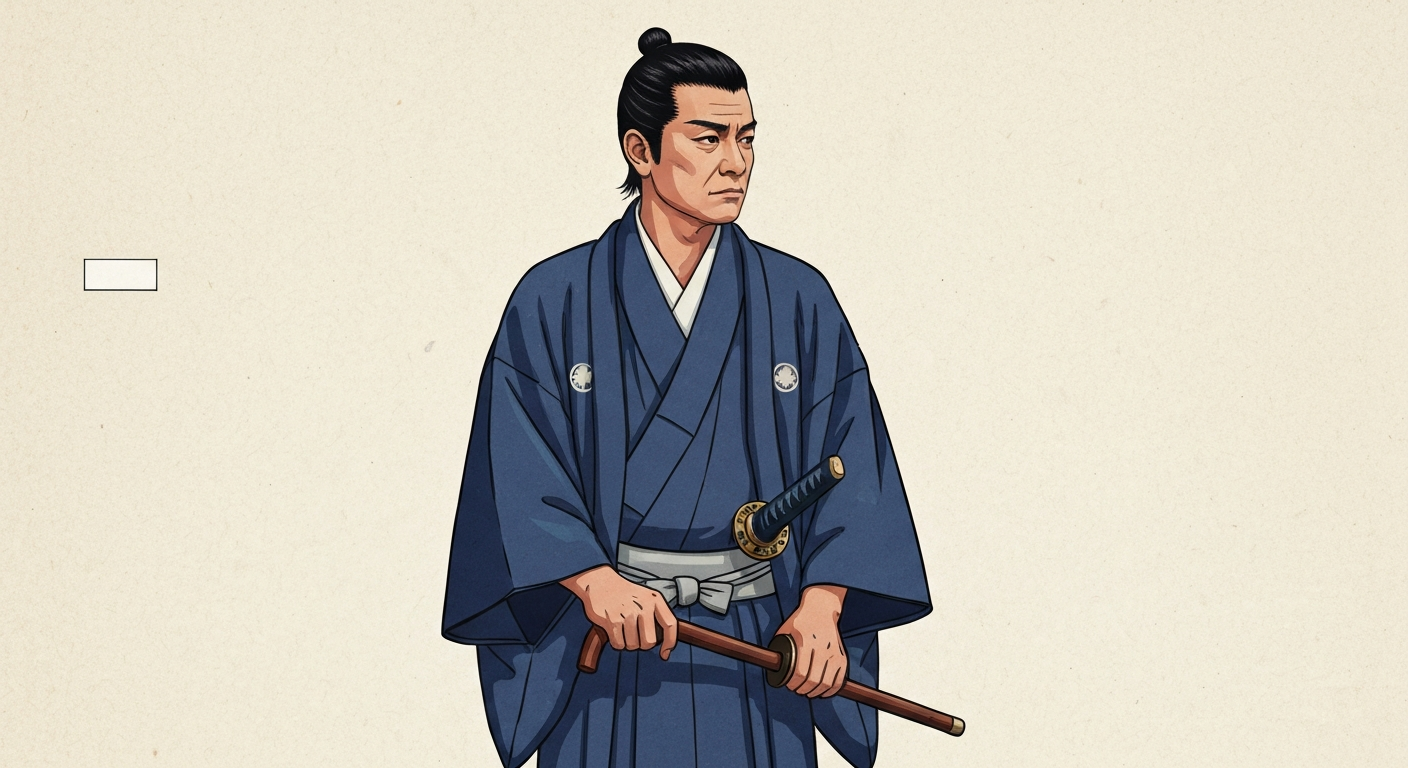
Quick facts at a glance
| Detail | Information |
|---|---|
| Full name | Katsu Shintaro (勝新太郎); born Toshio Okumura (奥村利雄) |
| Born | November 29, 1931, Tokyo, Japan |
| Died | June 21, 1997, Tokyo, Japan (age 65; throat cancer) |
| Occupations | Actor, film director, producer, musician, singer |
| Best known for | Zatoichi film and TV franchise (1962–1989) |
| Production company | Katsu Productions (勝プロダクション), founded 1967, dissolved 1981 |
| Spouse | Tamao Nakamura (中村玉緒), married 1962 |
| Estimated net worth at death | Negative to low positive (tens of millions of yen at most); primary documentation absent |
| Documented liabilities (1981) | Approx. ¥1.2 billion (Katsu Productions collapse) |
What we actually know about the numbers
Let me be upfront about the sourcing situation here, because it matters. The strongest financial documentation available for Katsu is on the liability side, not the asset side. Japanese press and film-industry retrospectives consistently report that when Katsu Productions collapsed in 1981, it left approximately ¥1.2 billion in debts. 日刊スポーツなど主要メディアは、1981年の勝プロ倒産時の負債を約12億円と報じている。 日刊スポーツなど主要メディアは約12億円と報じている。. That figure appears in multiple independent industry accounts, including coverage by Nikkan Sports and film-history commentary sources, and it is the single most reliably repeated financial fact about his estate.
What came after the collapse is described in press accounts rather than court filings. Reports indicate that his wife, actress Tamao Nakamura, established a successor entity (referred to in some accounts as 勝プロモーション) to manage ongoing work and coordinate debt repayment, a process that reportedly took roughly twenty years. If those accounts are accurate, the debts would have been largely retired by the time Katsu died in 1997, which opens the possibility of a modest positive net worth at death. However, without a published probate inventory or court estate valuation, no one can responsibly put a precise number on what remained.
Commercial aggregator websites list various figures, sometimes in the millions of US dollars. I'd treat those with real skepticism. None of those pages cite probate documents, audited company accounts, or verifiable estate filings, and the research for this article found no such primary documents in searchable public databases, including the National Diet Library catalog and general Japanese family court guidance resources. The honest published range, based on what is actually documented, runs from materially negative (if unresolved corporate guarantee claims persisted) to a low positive figure in the single-digit tens of millions of yen (if debts had been fully extinguished and modest personal assets remained).
Career income streams: where the money came from
Katsu had more revenue channels than most Japanese film actors of his era, which makes the scale of his eventual debt all the more striking. His income picture had at least five distinct streams.
Acting fees
From his debut at Daiei (大映) in the late 1950s through the 1970s and into the 1980s, Katsu was one of Japan's most bankable film stars. His per-picture fees rose substantially as the Zatoichi franchise turned him into a national institution. By the time he was producing his own films, he was effectively paying himself as the lead, which blurred the line between acting income and production profit.
Production company revenue and losses
Katsu Productions, which he founded in 1967, was his most ambitious financial venture and ultimately his most destructive one. The company produced films and television projects, giving Katsu creative control that most studio-contracted actors never had. That independence carried enormous cost overhead. By 1981 the company had accumulated those documented ¥1.2 billion in liabilities and was forced to dissolve. The model was not unusual for the era: Japan's studio system was weakening, and several major stars tried the independent production route. Most ran into the same problem Katsu did, specifically that production costs for prestige projects consistently outpaced box-office returns.
Directing
Katsu directed a small number of films himself, most notably Zatoichi (1989), the late-career theatrical revival that he helmed as both director and star. Directing fees added income but also reinforced his identity as an auteur, which was important for his negotiating leverage with distributors and television networks.
Music and singing
Katsu released enka and popular music records throughout his career. He was a genuine musician (trained in traditional Japanese music as a youth) and released dozens of singles and albums. Music royalties provided a secondary income stream that survived the production company collapse, though the scale of that income relative to his debts is not documented in public records.
Merchandising and licensing
The Zatoichi character generated merchandise, pachinko tie-ins, and licensing arrangements across several decades. The extent to which Katsu personally retained royalty rights versus assigning them to Daiei (and its successors) is a critical question for estimating his estate, and it is one that public records do not cleanly answer. The rights situation became even more complicated after Daiei transferred its film and business assets to Kadokawa (角川) in 2002, five years after Katsu's death.
Major works and the royalty question
The Zatoichi series is the anchor of any discussion about Katsu's long-term financial legacy. The franchise ran to 26 theatrical films between 1962 and 1989, plus a television series of 100 episodes broadcast from 1974 to 1979. By any measure, Zatoichi is one of the most commercially successful and culturally durable franchises in Japanese film history.
| Title | Year | Notes |
|---|---|---|
| Zatoichi (first film) | 1962 | Launched the franchise; produced by Daiei |
| Zatoichi series (films 2–25) | 1963–1973 | 26 theatrical films total across the series |
| Zatoichi Monogatari (TV series) | 1974–1979 | 100 episodes; major TV licensing revenue |
| Hito-Giri (Sword of Doom / Hitokiri) | 1969 | Distributor receipts reportedly approx. ¥290 million; ranked in year-end box office |
| Zatoichi (theatrical revival) | 1989 | Directed and starred; final theatrical entry in the franchise |
The 1969 film Hitokiri (人斬り) is a useful concrete data point: film-history sources cite distributor receipts (配収) of approximately ¥290 million for that single title, which ranked it among the year's notable box-office performers. That gives a sense of the commercial scale Katsu was operating at during his peak years. The revenue from those films flowed primarily through Daiei, and the portion that Katsu personally retained versus what stayed with the studio depends on contract terms that are not in the public record.
Here is where the rights picture gets complicated for posthumous royalty estimates. Daiei, which held the original production and distribution rights for most of the Zatoichi theatrical films, went through its own financial difficulties and ultimately transferred its film library and operating rights to Kadokawa in 2002. 日本ユニ著作権センター, 裁判の記録は、旧大映が保有していた権利が最終的に角川に帰属したと明記しています。 日本ユニ著作権センター — 裁判の記録 (analysis noting old Daiei rights ultimately held by Kadokawa). Copyright and film rights formerly held by the old Daiei are now situated within the Kadokawa group (marketed under Kadokawa/角川映画). That means the ongoing streaming and home video royalties from the classic Zatoichi films are flowing through Kadokawa's licensing structures, not directly to Katsu's estate in a straightforward way. Whether the estate holds any residual participation rights under the original production agreements is not documented in publicly accessible records.
Assets, estate and heirs
No publicly accessible probate inventory (検認済み遺産目録) or family court estate filing for Katsu has been located in searchable national databases. Under Japanese probate procedure, such documents are not automatically published online, which means the absence of a public record does not confirm the absence of assets. It simply means we cannot enumerate them from public sources.
What is known from press reporting is that Katsu's primary heir and the person most associated with managing his professional legacy was his wife, Tamao Nakamura. She was also a prominent actress in her own right and played an active role in debt repayment efforts after the 1981 company collapse. Their son, Ryutaro Katsu, also became an actor. Beyond that, the disposition of any specific real estate, savings, or intellectual property interests is not documented in public records available for this research.
Legal troubles and their financial impact
The 1990 drug arrest at Honolulu airport was one of the most damaging events of Katsu's later career, both reputationally and financially. On January 16, 1990, he was arrested at Honolulu International Airport on possession charges involving marijuana and cocaine. U.S. proceedings followed, and he was ultimately deported. Back in Japan, the case proceeded through the courts: on March 27, 1992, the Tokyo District Court handed down a guilty verdict with a sentence of two years and six months imprisonment, suspended for four years (懲役2年6月、執行猶予4年).
The financial consequences were significant on several fronts. Sponsorships and television work dried up during the legal proceedings. Legal defense costs in two countries added to an already stressed financial picture. Perhaps most importantly, the conviction damaged his ability to rebuild his commercial profile at exactly the period when, according to press accounts, his household was still working to retire the ¥1.2 billion in debts from the 1981 company collapse. The reputational damage was compounded by a separate 1990 incident in which a gun was found among his luggage, an episode that generated additional negative press coverage and further strained his professional relationships.
Posthumous revenue: Zatoichi in the streaming era
Even without precise royalty figures, it is reasonable to say that the Zatoichi franchise continues to generate licensing and streaming revenue. The films are available on major streaming platforms and have been released and re-released on home video formats across multiple decades. Kadokawa, as the successor rights holder for the Daiei library, has actively promoted the classic Japanese cinema catalog in domestic and international markets.
The key uncertainty for the Katsu estate is participation. If the original Daiei contracts included residual royalties payable to the actor or his successors, those flows would continue. If the contracts assigned all rights to Daiei outright (a common arrangement for studio-era Japanese productions), the estate would receive nothing from streaming or home video sales of those titles regardless of how well they sell. Without access to the original production contracts, this question cannot be answered definitively. What is clear is that the cultural demand for the films has not diminished: Zatoichi remains a frequently discussed and widely screened part of the Japanese film canon, and Takeshi Kitano's 2003 remake (produced under a separate rights arrangement) reinforced mainstream awareness of the character.
Katsu's music catalog also represents a posthumous revenue stream, though again the scale depends on contractual arrangements with his original record labels. His enka recordings circulate on streaming platforms, and compilation albums have been released in the years since his death.
How Katsu's financial story compares to his peers
Placing Katsu in context with other major Japanese cultural figures helps explain why his financial outcome was so different from what his career peak might have suggested. The comparison is instructive for anyone researching wealth patterns among Japan's postwar entertainment generation.
Ikutaro Kakehashi, the founder of Roland Corporation, built lasting institutional wealth through patents and a global technology company, a fundamentally different financial structure from a film star's project-by-project income. For a direct comparison of post-career wealth accumulation, see Ikutaro Kakehashi net worth. Katsu's attempt to institutionalize his career through Katsu Productions was in some ways a parallel ambition, but without the recurring product revenue that sustained Roland through market cycles. Readers interested in how creative entrepreneurs in Japan built (or failed to build) durable wealth will find Kakehashi's profile a useful contrast.
Akebono Taro, the Hawaiian-born sumo wrestler who became the first foreign-born yokozuna, represents another model of peak earnings followed by financial turbulence in retirement. For a detailed look at his financial trajectory, see a profile of Akebono Tarō net worth. Like Katsu, Akebono reached the very top of his profession and faced serious financial pressures later in his career. The parallel between a sport and a film franchise as wealth-generating vehicles, and the common challenge of sustaining income after the peak years, makes Akebono's profile worth reading alongside this one.
Toru Ohtani's profile reflects the newer generation of Japanese global sports stars, where international contract structures and endorsement markets operate at a scale simply unavailable to mid-twentieth-century film actors. The contrast illustrates how much the monetization infrastructure for Japanese celebrity talent has changed across generations.
Toyotarou, the manga artist who has continued Akira Toriyama's Dragon Ball Super, represents the IP-driven end of Japanese entertainment wealth, where a franchise's ongoing commercial value is directly tied to the creator's or licensee's continuing output. The Zatoichi franchise is a comparable IP story from film: enormous cultural and commercial value concentrated in a character that outlived its original creator. How the rights to that character are structured and who benefits from its continued commercial life is the central financial question of Katsu's legacy. For readers curious about how modern manga creators monetize long-running franchises, see Toyotarou net worth for a contemporary example of IP-driven earnings.
| Figure | Primary wealth source | Documented financial difficulty | Posthumous IP situation |
|---|---|---|---|
| Shintaro Katsu | Film acting, production company | ¥1.2B production company collapse (1981); drug conviction (1992) | Rights held by Kadokawa via Daiei; estate participation unclear |
| Akebono Taro | Sumo, later MMA/entertainment | Financial difficulties reported post-career | Limited IP legacy |
| Ikutaro Kakehashi | Roland Corporation patents and product revenue | No major documented insolvency | Corporate IP through Roland/acquired entities |
| Toru Ohtani | MLB contracts, endorsements | None documented to date | Active career; IP not yet a posthumous question |
| Toyotarou | Manga/IP licensing (Dragon Ball Super) | None documented | Active creator; IP tied to Shueisha/Toei licensing structures |
The broader pattern worth noting is that Japan's postwar entertainment industry did not provide film stars with the same long-term royalty and residual structures that Hollywood union agreements created for American actors. Many of the most celebrated Japanese film figures of Katsu's generation ended their careers with financial profiles that looked nothing like their cultural stature. That is not a judgment on Katsu specifically. It is a structural feature of the industry he worked in, and it is essential context for any honest discussion of his net worth.
A note on methodology and what is missing
This profile draws on Japanese film industry press and retrospective coverage, contemporaneous court reporting (including the 1992 Tokyo District Court verdict summary), U.S. news coverage of the 1990 Honolulu arrest (Los Angeles Times), corporate history records of the Daiei-to-Kadokawa rights transfer, and Japanese copyright center case analysis. The documented ¥1.2 billion liability figure is the most robustly sourced financial fact in the record. The debt-repayment timeline comes from press accounts rather than audited financial statements. No probate inventory, estate court valuation, or audited liquidation balance sheet for Katsu's personal estate was located in publicly accessible databases. Any estimate of a positive net worth at death is therefore an inference, not a documented fact, and readers should treat it as such. Commercial aggregator sites that list precise dollar figures without sourcing those figures to primary documents should not be used as evidence.
FAQ
What is the best-evidenced estimate of Shintaro Katsu’s net worth (range and figure at time of death)?
Defensible published range based on available primary and strong secondary sources: materially negative (if unresolved corporate liabilities persisted) up to low single‑digit tens of millions of yen positive. No public, audited probate/estate inventory or court‑filed estate valuation was found, so a precise figure at the time of death is not supported by primary records. This judgment rests chiefly on documented facts about the 1981 Katsu Productions bankruptcy (reported ≈¥1.2 billion liabilities), later accounts that the family worked for years to retire debts, and the absence of publicly accessible probate/accounting filings.
Why can’t we give a precise net‑worth number for Shintaro Katsu at death?
No digitized probate/estate inventory, family‑court filing or publicly available audited liquidation balance sheet was located. The strongest verifiable financial facts (the reported ≈¥1.2 billion Katsu Productions liabilities and later press accounts about long debt‑repayment) make a precise positive net‑worth number unsupported; public commercial “celebrity net worth” pages exist but cite no primary documentation and therefore are not reliable for a definitive figure.
Which primary and secondary sources support the net‑worth range and its components?
Key sources used: (1) National Film Archive program and historical film sources noting Katsu’s founding of Katsu Productions (1967); (2) film‑industry histories and press accounts documenting Katsu Productions’ collapse in 1981 and repeated reporting of ≈¥1.2 billion liabilities (e.g., Ship‑S commentary, Bunshun, Nikkan Sports); (3) contemporary reporting of arrests/convictions (Los Angeles Times, Japanese court reporting) detailing legal problems that affected his career; (4) corporate/rights histories showing Daiei film rights ultimately moved into Kadokawa (affecting royalty streams); (5) searches for probate/estate records (no public record found). These are the evidentiary basis for the range and component conclusions.
Which income streams contributed (or could have contributed) to Katsu’s wealth during life and posthumously?
Primary and plausible income streams: acting salaries and residuals (feature films, TV); directing and producing fees; music recordings and performance income; revenues from Katsu Productions (production fees and producer shares) while the company operated; merchandising/licensing of character/IP (notably Zatoichi) subject to current rights ownership; posthumous streaming and licensing receipts when copyrights/rights produce revenue (but many Daiei-era rights moved to Kadokawa). The scale of these streams after the company collapse is uncertain because of corporate insolvency and rights transfers.
How did Katsu Productions’ 1981 collapse affect his personal wealth?
Contemporary and retrospective accounts report that Katsu Productions folded in 1981 with large liabilities (commonly reported ≈¥1.2 billion). The collapse increased financial strain, created long‑running debt obligations, and required years of repayment activity by Katsu and his family. Depending on whether Katsu personally guaranteed company debts or how liabilities were resolved, the bankruptcy could have turned personal net worth negative or materially reduced any prior assets. Primary company liquidation filings were not found online to show final creditor recovery or personal guarantees.
Did legal troubles (drug arrests, convictions) materially affect his finances?
Yes. His 1990 arrest in Honolulu and subsequent 1992 conviction in Japan (2 years 6 months, suspended 4 years) harmed his reputation and likely reduced earning capacity late in life—fewer roles, cancellations, and legal costs are all plausible financial impacts. Reporting on those events (Los Angeles Times and Japanese court summaries) documents the events; quantifying exact monetary loss from reputational damage is not possible from available public sources.